
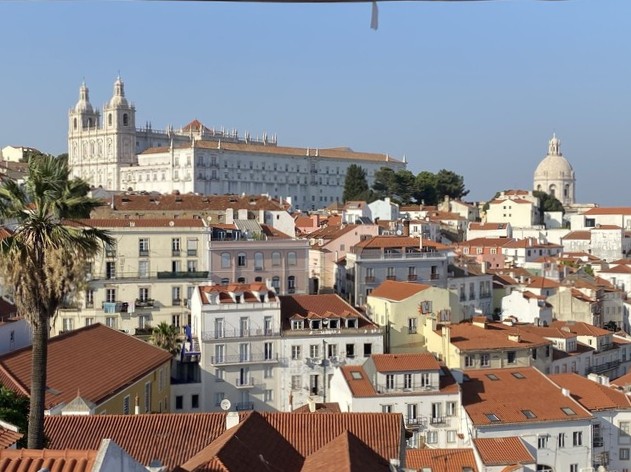
This post contains affiliate links. Full disclosure at the bottom of the page.
In This Guide:
Arriving in Lisbon & Our Accommodation
Dinner at Pizzaria Tapas La Familia
Why Lisbon?
When we were planning our Algarve holiday, our original idea was to fly to Faro. However, flights to Faro were significantly more expensive at that time than the ones to Lisbon, so we eventually decided to fly into the Portuguese capital instead. Since we had never been to Lisbon before – and it had been on our bucket list for ages – we were more than happy to combine our beach holiday with a short city break.
Although we didn’t have enough time to see every landmark, we had just the right amount of time to get a taste of this unique city and enjoy its atmosphere. On the day we arrived, we headed straight to the famous Belém district, where countless sights awaited us.
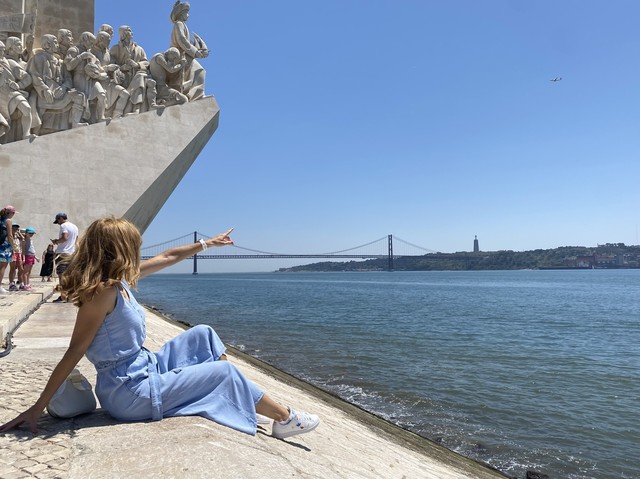
You can find a separate blog post about it here.
The day before our flight home, we spent the afternoon wandering around Lisbon’s historic centre, and on our final morning – before heading to the airport – we visited Cabo da Roca, the westernmost point of mainland Europe.
If Lisbon is your base, you can easily find exciting activities and tours on sites like Freetour, GetYourGuide or Tiqets, and book them in advance.
We drove from Portimão to Lisbon after our wonderful Algarve holiday.
You can find our full day-by-day Algarve itinerary here.
Check-in at our hotel was available from 2:30 PM, so we tried to arrive on time.
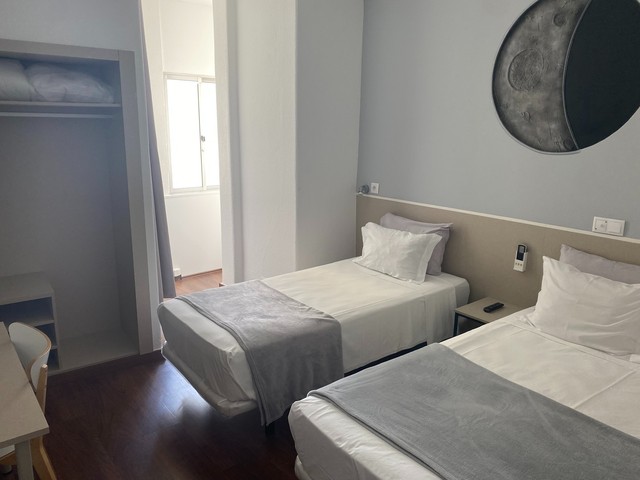
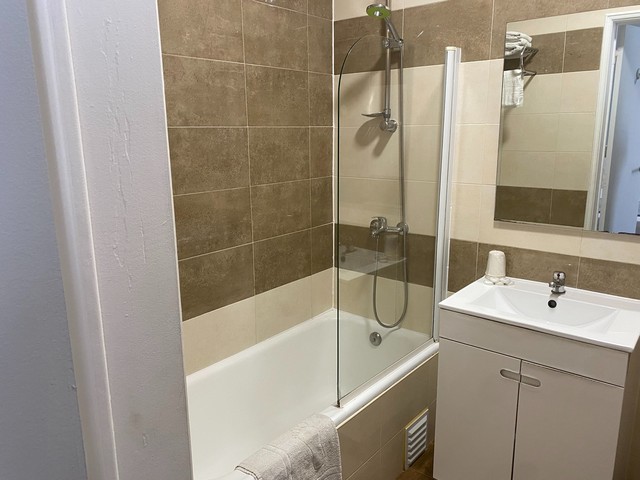
A little after half past two we checked in, and after a short rest we headed out to explore the city. Our accommodation was essentially a classic hotel room with breakfast included. It wasn’t very large, but it had everything we needed. It was clean, comfortable, and – thanks to its central location – it turned out to be a perfect base for sightseeing.
If you are looking for similar deals, I highly recommend checking Expedia orHotels.com as well to compare prices for family suites.
Parking, however, was a bit more challenging. We happened to arrive on a Sunday, when street parking is free until Monday morning at 8 AM. On Monday my husband went down early to move the car to a nearby paid parking garage so it would be in a safe and guaranteed spot. This is actually quite common in Lisbon – parking in the historic centre can be tricky, so if you’re arriving by car, it’s worth checking nearby garages in advance. Parclick is a great option for finding and reserving secure parking spaces, so you can enjoy your day without worrying about the car.
The Baixa district was only a few minutes’ walk from our hotel, so we started our explorations in that direction. Our first stop was Rossio Square, often described as the heart of Lisbon’s everyday life. Since medieval times this square has been a favourite meeting point for locals – it has seen celebrations, markets, and even executions in the past.
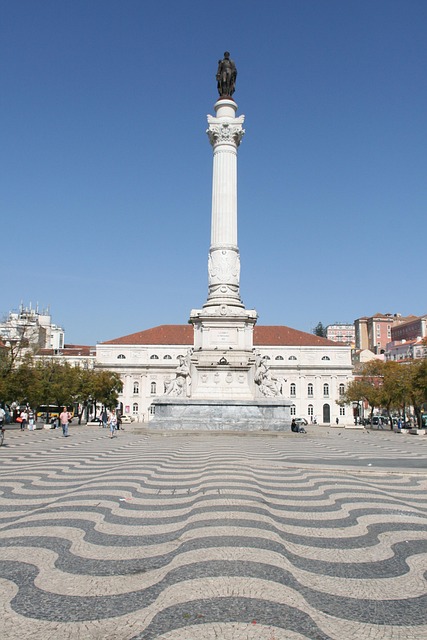
In the centre stands the column of Dom Pedro IV, King of Portugal and Emperor of Brazil, while two monumental baroque fountains decorate each side. The square’s famous wavy black-and-white mosaic pavement seems to move beneath your feet – a stunning example of traditional Portuguese calçada.
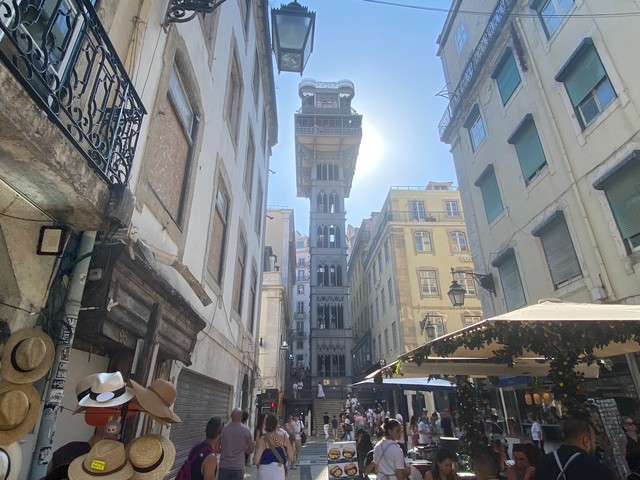
From Rossio we continued through the lively streets of Baixa and soon reached the Santa Justa Lift (Elevador de Santa Justa), one of Lisbon’s true icons. This intricate wrought-iron structure has been operating since 1902, connecting the streets of Baixa with Carmo Square.
The Santa Justa Lift is incredibly popular, and queues can be long. The best way to use the lift (and other public transport) for free is by using the Lisboa Card. You can check the details and grab yours here:
The lift offers beautiful views over the city, so if you have more time in Lisbon, it’s definitely worth going up at least once. (If you’re travelling with a young child, keep in mind that queues can get long at times, so a little patience – or arriving earlier – can help.)
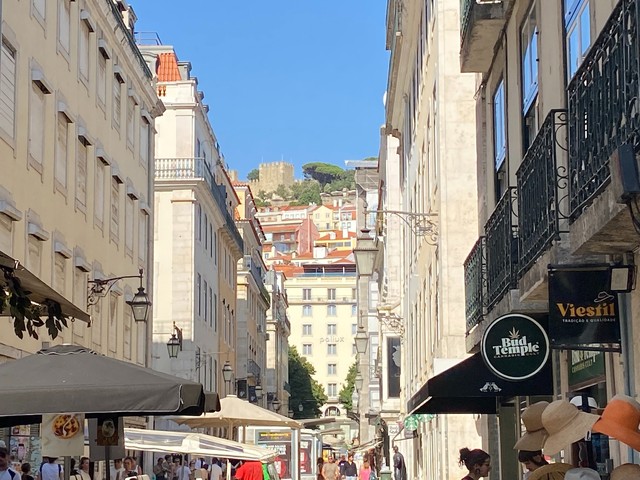
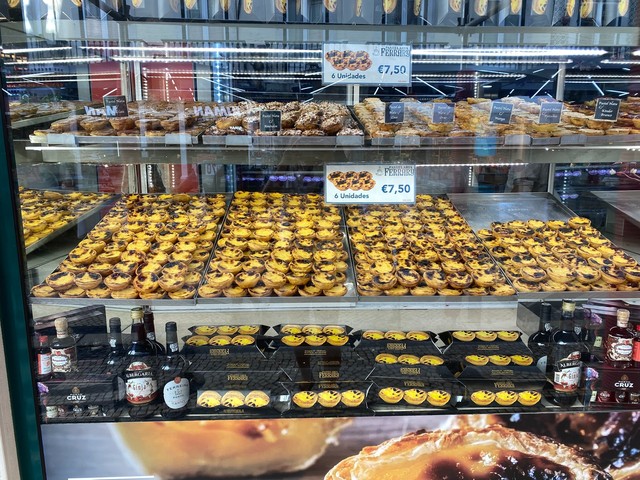
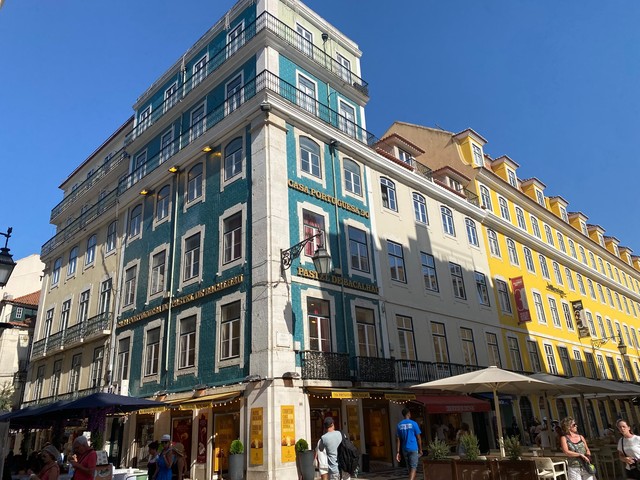
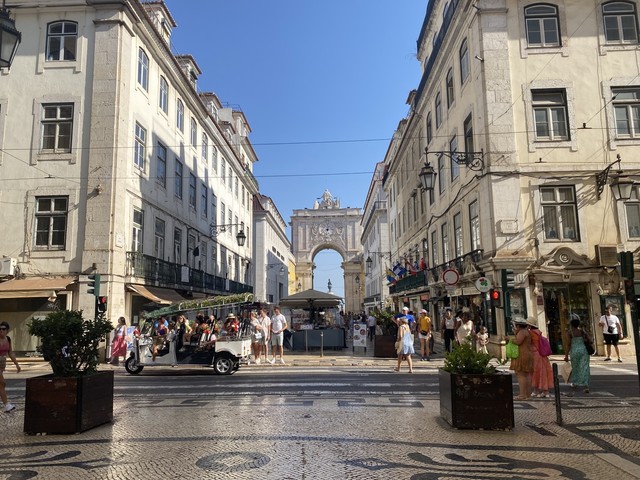
After admiring the lift, we made our way towards one of Lisbon’s most popular pedestrian streets: Rua Augusta. This elegant, cobblestoned street is the vibrant centre of Baixa, lined with symmetrical neoclassical buildings. On the ground floors you’ll find cafés, bakeries, restaurants, and shops one after another – the atmosphere here is lively, colourful, and unmistakably Lisbon. The city truly comes to life along this street: modern yet historic, elegant yet bohemian. At the far end, the grand triumphal arch, Arco da Rua Augusta, rose before us – a magnificent gateway to one of the city’s most beautiful squares.
Arco da Rua Augusta
Lisbon’s triumphal arch is not only one of the city’s most recognisable landmarks, but also a symbol of Lisbon’s rebirth. It was built after the devastating 18th-century earthquake and celebrates the reconstruction of the city.
The allegorical statues crowning the arch represent Portugal’s glory and strength – including figures of Vasco da Gama and other great explorers. You can also go up to the viewing terrace at the top, which offers breathtaking views over Praça do Comércio and the Tagus River. It’s manageable with a young child, but not recommended with a stroller, as the access is narrow and involves stairs. If you plan to go up, a baby carrier is a better option.
Tickets should be booked online in advance—especially in high season—to enjoy the best views without the long queues. Get your Arco da Rua Augusta tickets:
Praça do Comércio – On the Banks of the Tagus
Passing under the arch, we arrived at the wide, sun-drenched Praça do Comércio, one of the most impressive squares in Lisbon. Before the great 1755 earthquake, this was the site of the royal palace, which was completely destroyed. Today the square is framed on three sides by elegant, yellow-coloured arcaded buildings, while the fourth side opens onto the shimmering waters of the Tagus River.
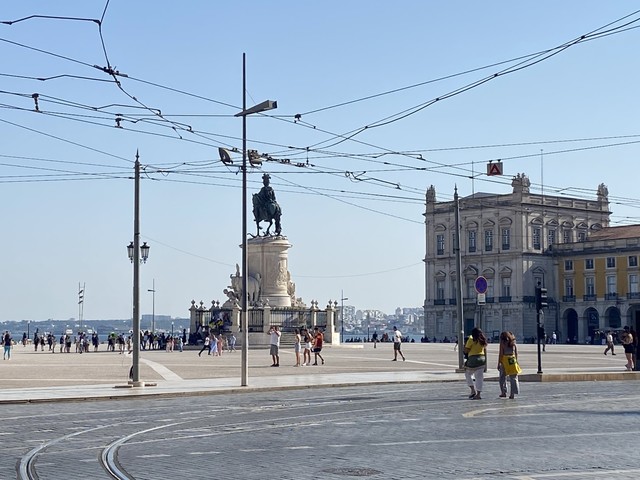
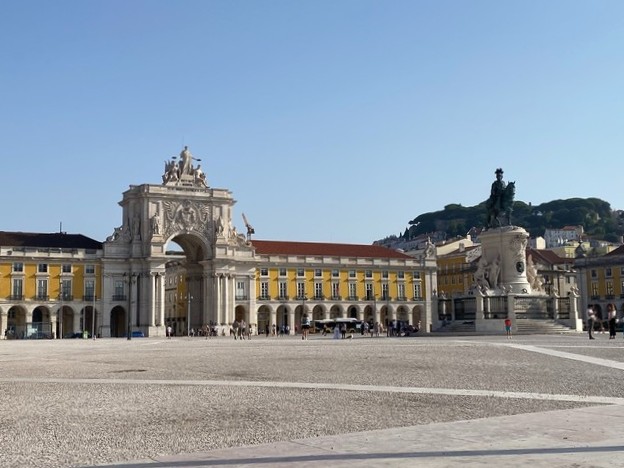
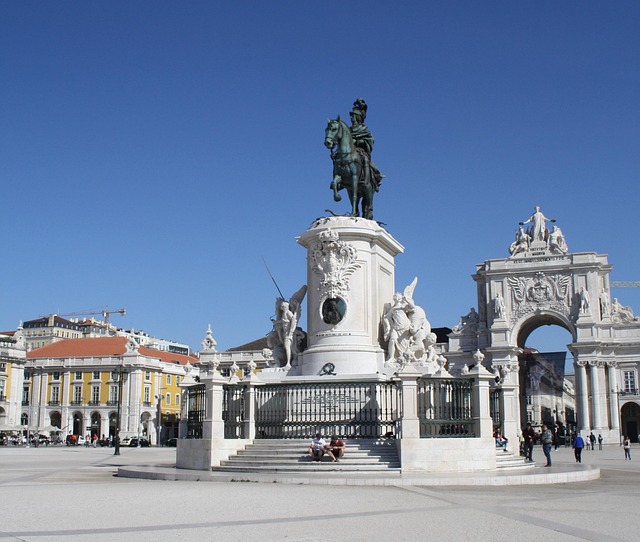
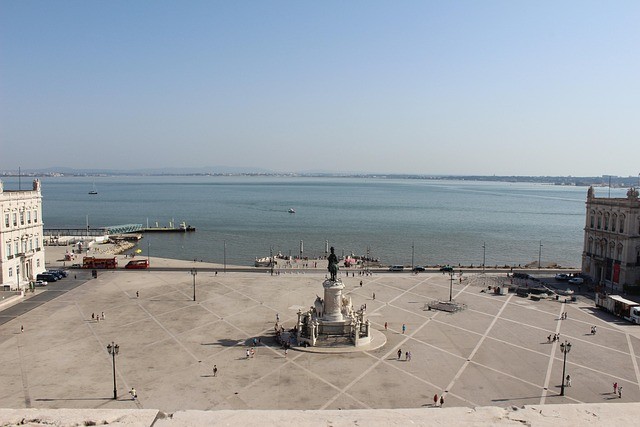
In the centre stands the equestrian statue of King José I, with the majestic Arco da Rua Augusta behind him – an irresistibly photogenic scene. Praça do Comércio is also a practical starting point for many activities: several Tagus River boat tours depart from nearby, and the famous Tram 28 is easily accessible from here if you’d like to continue exploring Lisbon’s higher districts such as Alfama or Chiado.
We chose to continue on foot and kept walking towards the cathedral.
Alfama is the oldest district in Lisbon, a maze of narrow lanes, steep alleyways, and beautifully tiled façades. Wandering through the cobblestone streets truly felt like stepping back in time. After just a few minutes of strolling, we reached one of Lisbon’s most iconic landmarks: the Sé Cathedral (Catedral Sé Patriarcal).
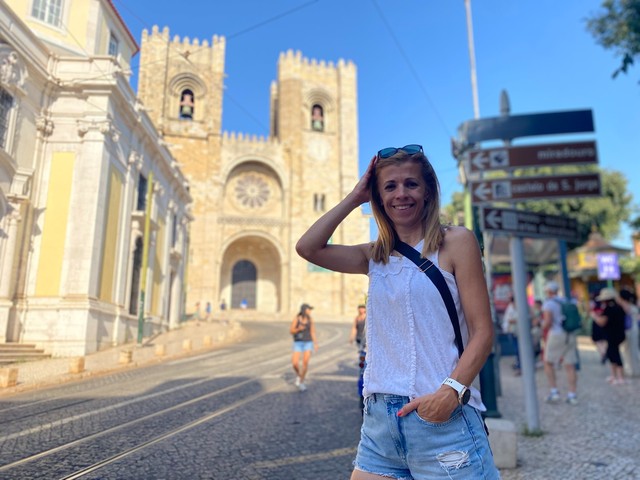
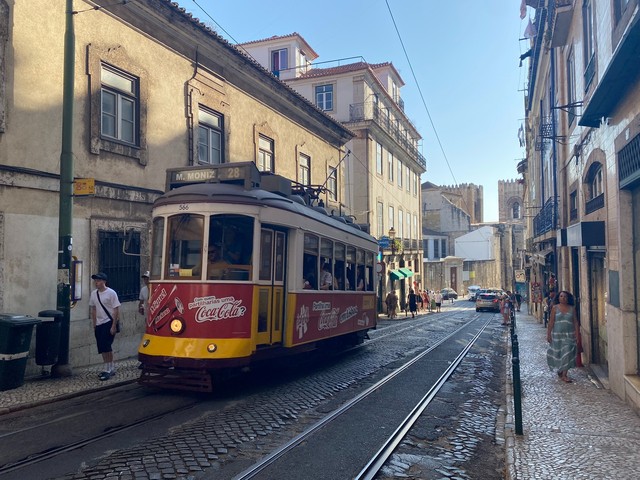
This massive, fortress-like cathedral dates back to the 12th century and has been the heart of the city’s religious life ever since. Its twin towers are visible from afar, and its solid, castle-like exterior instantly captures your attention. We didn’t go inside—just admired it from the outside.
Our daughter was fascinated by the famous Tram 28 passing right in front of the cathedral every few minutes. This charming yellow tram, with its old wooden seats and clattering, winding route through the steep streets, is one of the most beloved symbols of Lisbon. Since it can get extremely crowded, we decided not to hop on this time, but we loved watching it rattle past us again and again—there’s something so unmistakably “Lisbon” about it.
Miradouro de Santa Luzia
From the cathedral, we continued walking uphill towards the Miradouro de Santa Luzia viewpoint. The path is a bit steep, but perfectly manageable on foot—even with a small child, as long as you take it slowly and stop for shade from time to time.
The viewpoint offers a gorgeous panorama over Alfama’s red rooftops and the Tagus River. Santa Luzia is not just stunning for its views—the atmosphere is enchanting too: blue-and-white azulejo tiles, arcaded terraces, and pergolas draped with bougainvillea.

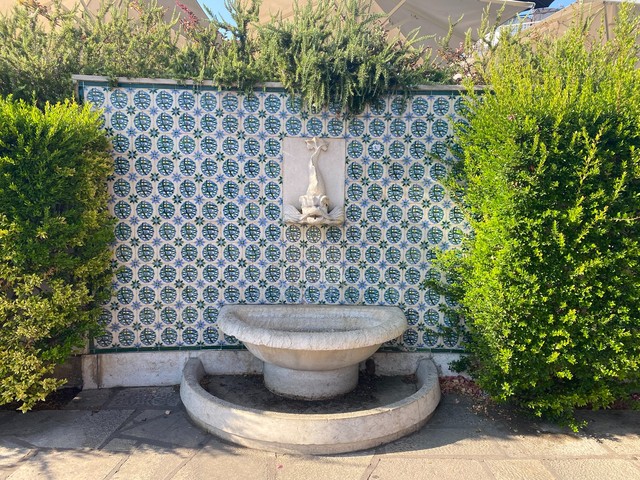
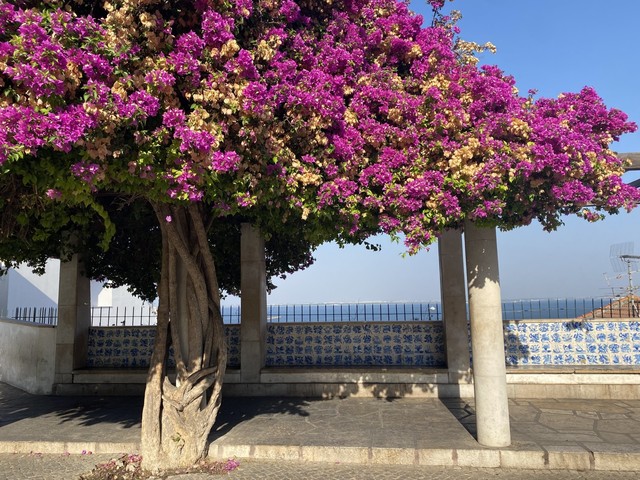
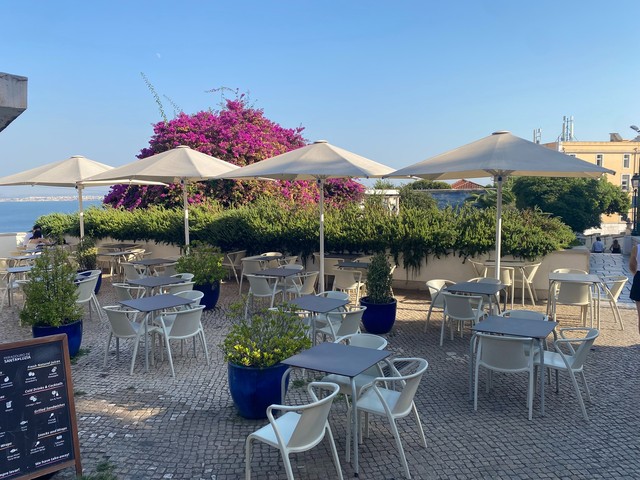
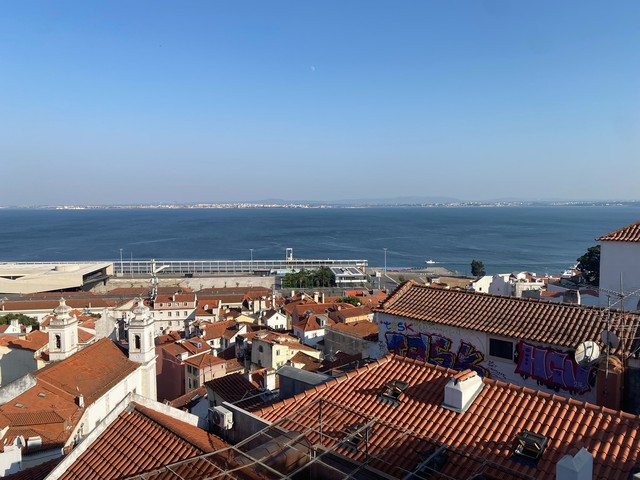
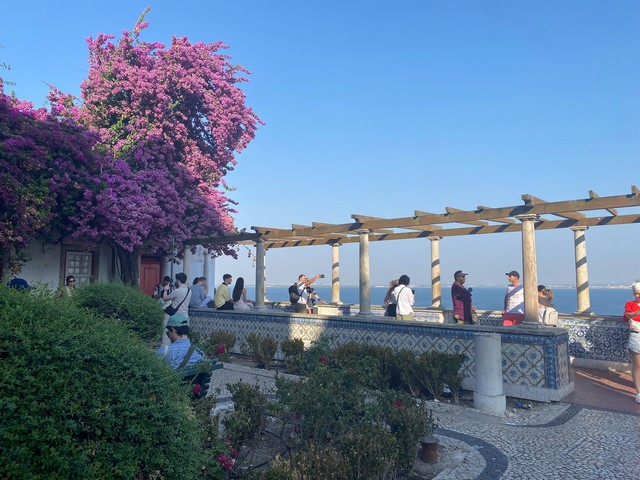

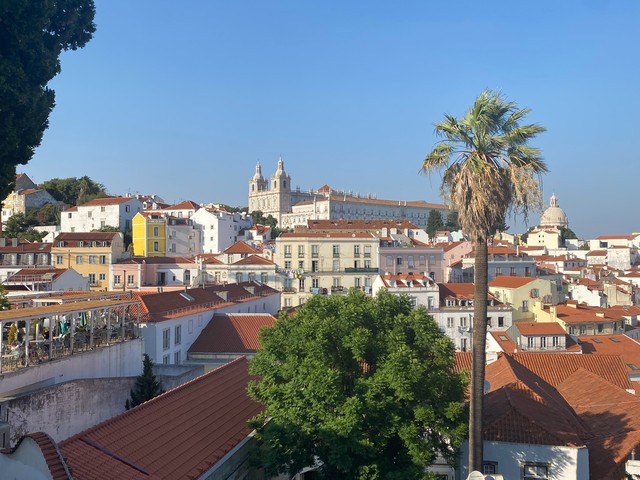
We paused here for a short break while the sun slowly dipped lower above the river. In the distance, we could hear the city’s hum, the ringing of trams, and the soft sound of guitar music. It was one of those simple yet unforgettable travel moments.
Towards the Castle – and a Peaceful Evening Walk Down
From Santa Luzia, we kept walking uphill towards São Jorge Castle (Castelo de São Jorge). The route leads through some of the most picturesque parts of Alfama, with narrow winding lanes, colorful houses, flower-filled windows, tiny cafés, and faded ceramic tiles lining the walls.
We didn’t enter the castle because it closes at 6 PM, and we arrived around 5:30. Still, we stopped at the gate for a moment—there’s a beautiful view from here as well. We also loved watching the peacocks wandering freely around the area, which our daughter found especially exciting.
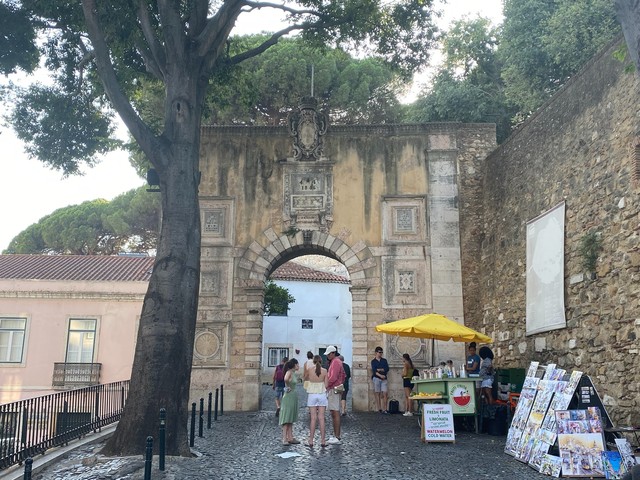
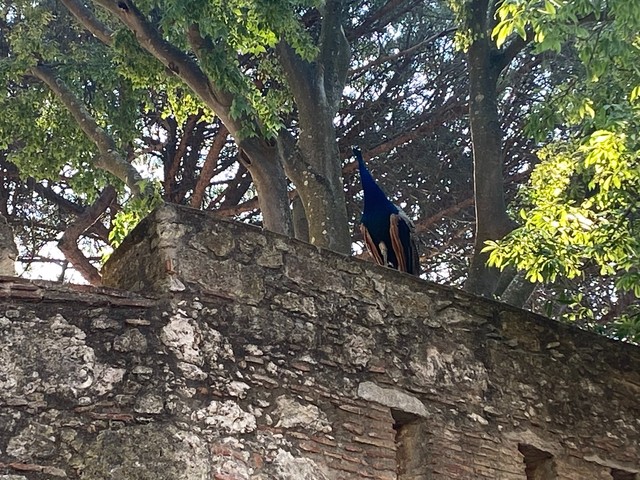
After a short rest, we headed downhill, choosing a quieter street instead of retracing our steps. That’s one of the best things about Lisbon: no matter which direction you choose, you always stumble upon a charming alley, a hidden little square, or a tiny shop inviting you to stop for a moment.
At the end of our walk, we stopped for dinner at Pizzaria Tapas La Familia, a cozy restaurant close to the cathedral and only a few minutes from Praça do Comércio. The place is quite small, with only a handful of tables, which gives it a warm, intimate, family-friendly atmosphere.Dinner time in Portugal usually starts later, so at around 6:30 PM the restaurant was still fairly quiet—a big advantage when traveling with a young child.
Pizzaria Tapas La Familia is a real gem: a charming Portuguese–Italian restaurant with colorful paintings inspired by traditional Portuguese motifs. The staff was incredibly friendly and helpful. They explained everything patiently to make sure we ordered exactly what we wanted, and they spoke excellent English—which is not always the case in Lisbon.
The food was delicious and offered great value for money. We finally had a chance to relax after a long day, and our daughter happily enjoyed her beloved pasta carbonara. Naturally, dessert was a must: we ended the meal with a warm, freshly baked pastel de nata—simply perfect.
After finishing dinner, we strolled back to our accommodation along the cobblestone streets, while the soft tram bells still echoed in the distance. Ending our Algarve trip with a short visit to Lisbon turned out to be an excellent decision. Even though we spent only one afternoon in the city center, we managed to see so many highlights—and we truly enjoyed our time here.
The next morning, after my husband returned from the parking garage—Monday mornings in Lisbon can be tricky—we had a relaxed breakfast in the hotel’s dining area. Since we didn’t want to leave the car in the garage for too long, we decided not to stay in the city. Our flight was only at 6 PM, so we had plenty of time for a half-day trip before heading to the airport.
We set off for Cabo da Roca, Europe’s westernmost point, located about a 40-minute drive from Lisbon. After checking out of the hotel, we were on our way, and we arrived just before 10 AM—perfect timing, as the parking lot was still almost empty. Later in the day, it gets much busier.
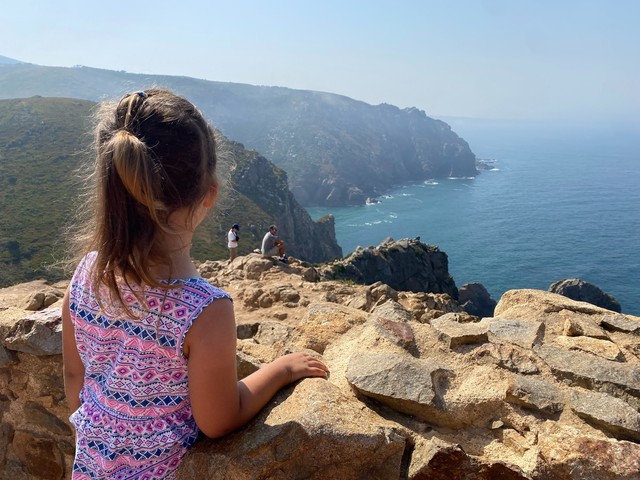
Cabo da Roca is a dramatic 140-meter cliff overlooking the Atlantic Ocean. Standing here really feels like being at “the edge of the world”—no wonder the national poet Luís de Camões wrote: “Here, where the land ends and the sea begins.”
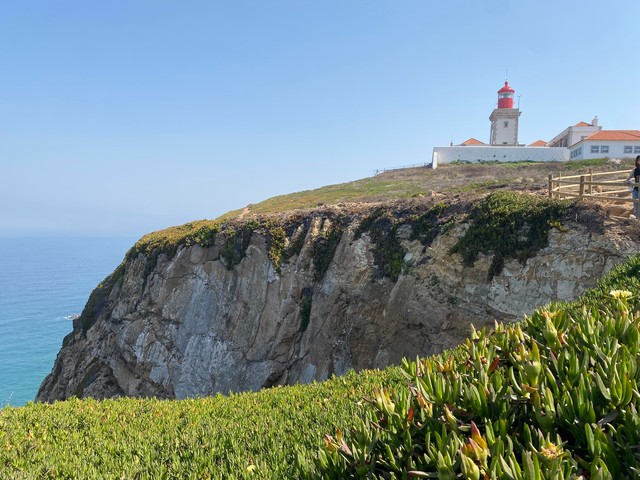
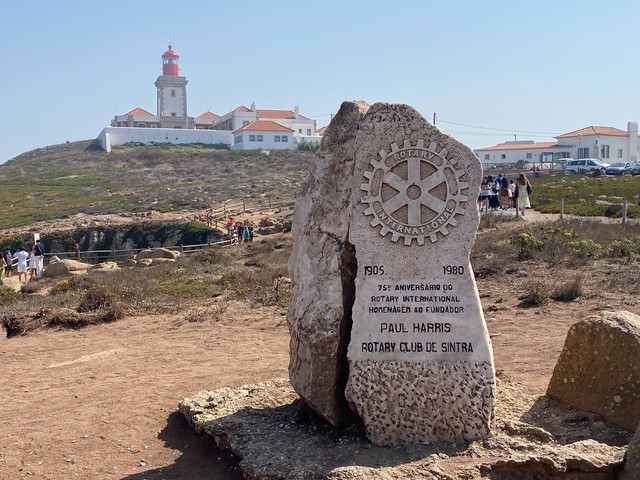

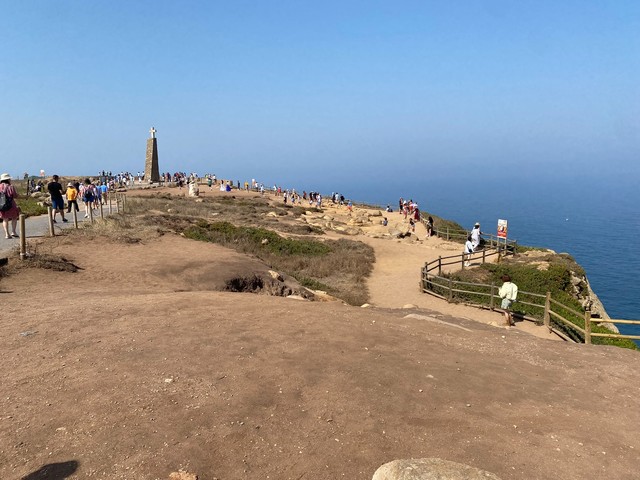
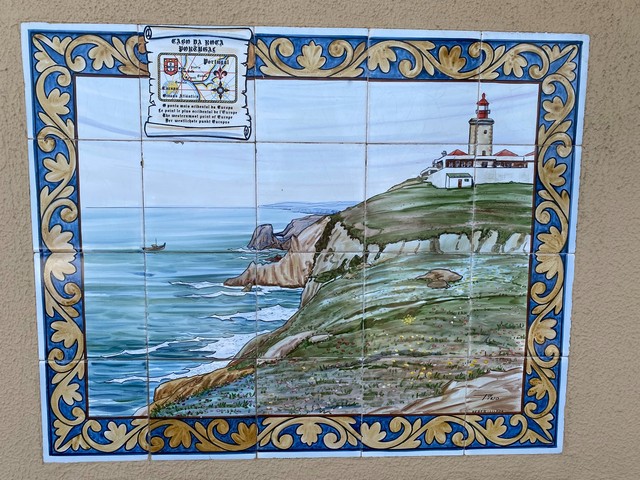
On top of the cliffs stands a lighthouse built in 1772. At 22 meters tall, its light can be seen from up to 40 kilometers away. The official westernmost point is marked by a stone monument with a cross and a plaque—and the view from here is absolutely breathtaking.
The rugged green-grey cliffs, the hardy plants clinging to the rocks, and the deep-blue ocean below create a spectacular landscape in every direction. Standing at the edge of Europe was both awe-inspiring and peaceful.
Practical Tips for Families
The parking area is right next to the viewpoint, making the site easy to access with small children. There are no railings along some edges of the cliffs, so extra caution is essential for families.
Since there is very little shade, hats, sunglasses, and water are must-haves on sunny days. The wind is often strong, so dressing in layers is a good idea.
Cabo da Roca is free to visit, and parking is also free. Next to the viewpoint, there is a small gift shop and café called Artesanato Bar. We stopped here for a hot chocolate and a coffee while enjoying the scenery. The place gets busy later in the day, but in the morning it was calm and relaxing. Note that the restroom is only for customers, and prices are slightly above average—though the atmosphere and the views more than make up for it.
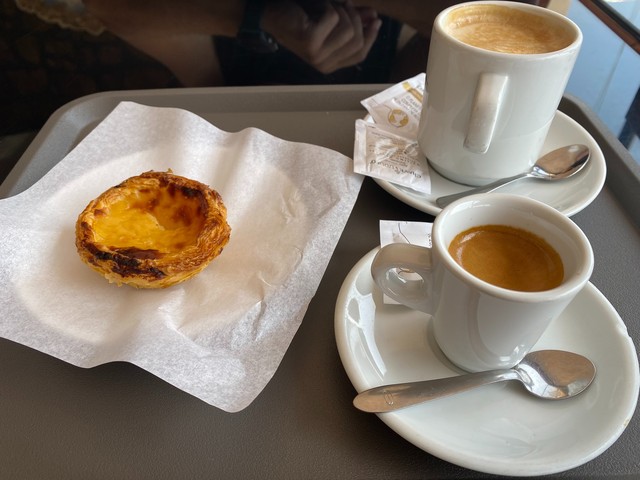
After our break, we started driving toward the airport. Our daughter fell asleep in the car—no surprise after such a full day. Near the airport we stopped to refuel, have lunch, and clean the car before returning it.
Our flight left on time. As the plane took off, we looked back at Lisbon one last time—the river, the bridge, and somewhere far on the horizon, perhaps even Cabo da Roca. It was the perfect end to a trip filled with discoveries, family moments, and unforgettable experiences.
Some of the links in this post are affiliate links. This means we may earn a small commission at no extra cost to you. This helps support WanderingKite and allows us to continue sharing family travel tips and experiences.
@ Copyright - WanderingKite | All rights reserved! | Privacy Policy