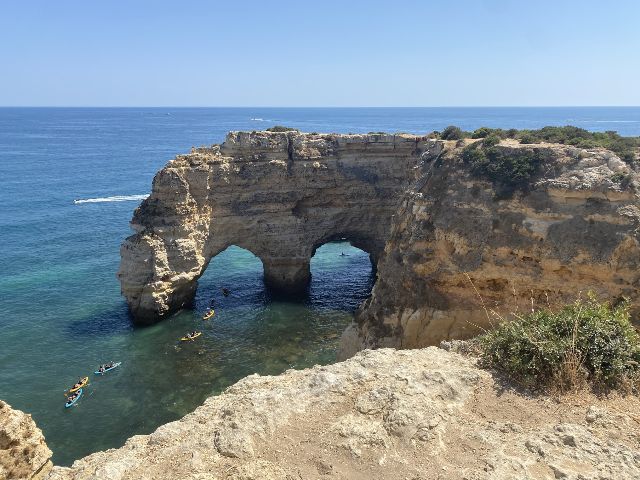
Algarve with a Toddler – 6 Days of Beaches, Cities, and Family Adventures in Portugal

This post contains affiliate links. Full disclosure at the bottom of the page.
In this post:
Belém Tower is one of Lisbon’s most iconic landmarks
The Monument to the Discoveries (Padrão dos Descobrimentos)
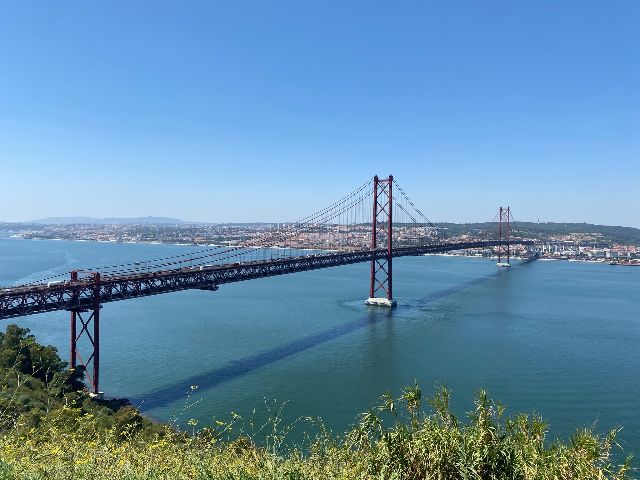
Crossing the 25th of April Bridge (Ponte 25 de Abril)
The Christ the King Statue (Cristo Rei)
Where We Stayed in the Algarve
After finally picking up our rental car, we headed straight towards the Belém district. The area is packed with attractions, but since we were traveling with a young child — and had already lost two hours at the car rental office — we decided to stick to a shorter itinerary: the Belém Tower and the Monument to the Discoveries. The Jerónimos Monastery requires a bit more time to explore, so we decided to skip it this time. But if you visit Belém and have more time, make sure not to miss it.
Another unmissable stop in Belém is the legendary Pastéis de Belém bakery. While it’s not a sightseeing spot in the traditional sense, it’s just as much part of the neighborhood’s charm as its historic landmarks. Open since 1837, this famous patisserie is where the world-renowned pastéis de nata (Portuguese custard tarts) are made – creamy inside, crisp and flaky outside. This iconic dessert is simply a must-try when in Portugal!
Our route looked like this:
Torre de Belém (Belém Tower) → Padrão dos Descobrimentos (Monument to the Discoveries) → across the 25th of April Bridge to the Christ the King Statue.
We parked next to the Belém Tower, where parking was luckily free.
Tip for families: Since we hadn’t checked into our accommodation yet, we had all our luggage with us. If you arrive before check-in or have some time to kill after picking up your car, we highly recommend using Radical Storage to safely drop off your bags so you can explore Belém hands-free. Alternatively, if you keep your luggage in the car, make sure to pack your valuables into a backpack to keep them with you. We did exactly this and set off to find a nice spot for lunch. Also, always keep some snacks, water, and a few small toys or coloring books handy – they make a world of difference when traveling with a toddler! big difference when traveling with kids.
When we reached the Belém Tower, we were a bit disappointed to see it fully covered in scaffolding due to renovation works, so we couldn’t go inside.
It was a pity, since Belém Tower is one of Lisbon’s most iconic landmarks. Built between 1514 and 1520, it originally served to guard the entrance to the port. Its exotic decorations and rich Manueline details make it a true architectural gem, even though it was initially designed for military purposes. Standing on the banks of the Tagus River, this 30-meter-high tower has five floors connected by a spiral staircase. This is where Portuguese explorers – including Vasco da Gama – set sail during the Age of Discoveries, embarking on voyages that changed the course of history.
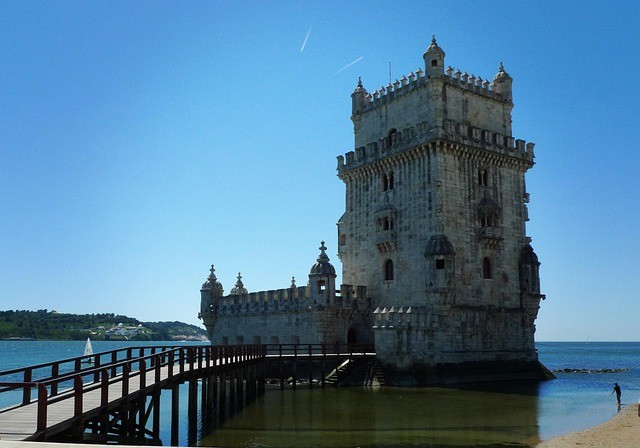
Commissioned by King Manuel I, who also ordered the construction of the Jerónimos Monastery, the tower was designed by Francisco de Arruda, who incorporated his military engineering experience into the plans. Although everyone knows it as Belém Tower, its official name is the Tower of St. Vincent (Torre de São Vicente de Belém), after Lisbon’s patron saint. Today, it’s proudly listed as a UNESCO World Heritage Site.
The surroundings are equally beautiful: the river promenade and nearby attractions – such as the Jerónimos Monastery and the Monument to the Discoveries – complement each other perfectly, so it’s easy to spend even a full day in this area.
Belém Tower Opening hours: 9:30 AM – 6:00 PM (last ticket at 5:00 PM, last entry at 5:30 PM). Closed on Mondays, January 1, Easter Sunday, May 1, June 13, and December 25.
Tickets: it’s best to book in advance online to skip the queues. Reliable platforms include GetYourGuide, Tiqets, and Freetour.
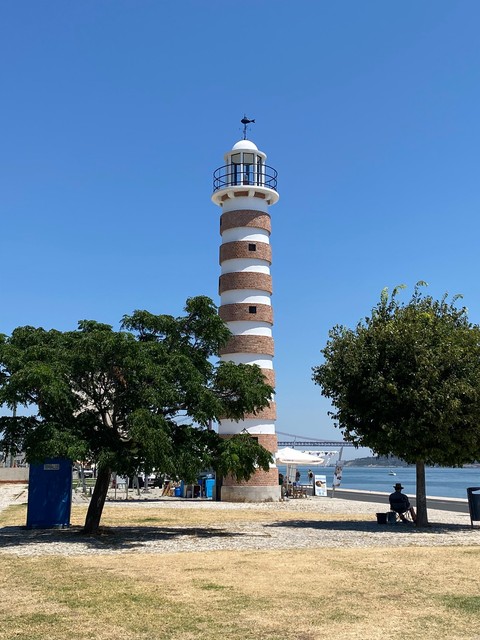
A little disappointed that we couldn’t go inside Belém Tower, we didn’t let that ruin our day. We continued our walk toward the Monument to the Discoveries, along a wide, scenic riverside promenade lined with small cafés and food trucks. It’s an easy, stroller-friendly path, perfect for families.
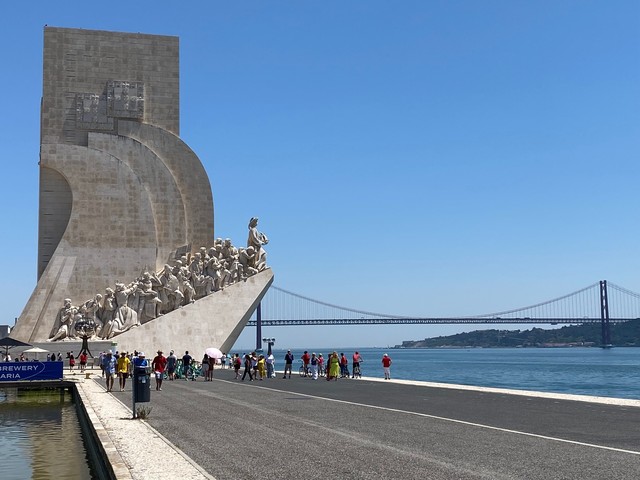
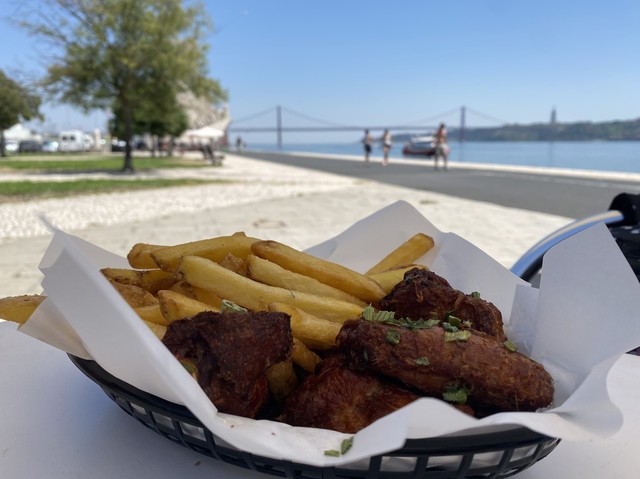
We stopped for lunch at a food truck called Pourtina Express, which turned out to be a lovely surprise. They serve freshly made dishes with plenty of topping and combo options. The staff was friendly and helpful, and the prices were very reasonable for a quick lunch. What made it even better was that they offer gluten-free and vegetarian options – so everyone can find something to enjoy. We had a relaxed meal here while taking in the beautiful river views. It’s a perfect family-friendly stop on a Lisbon sightseeing day.
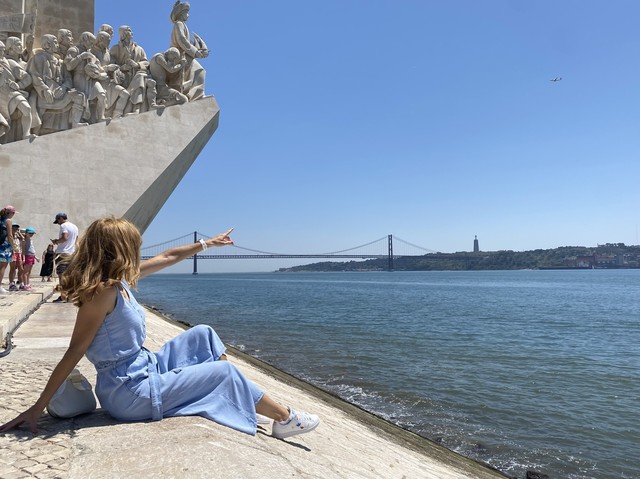
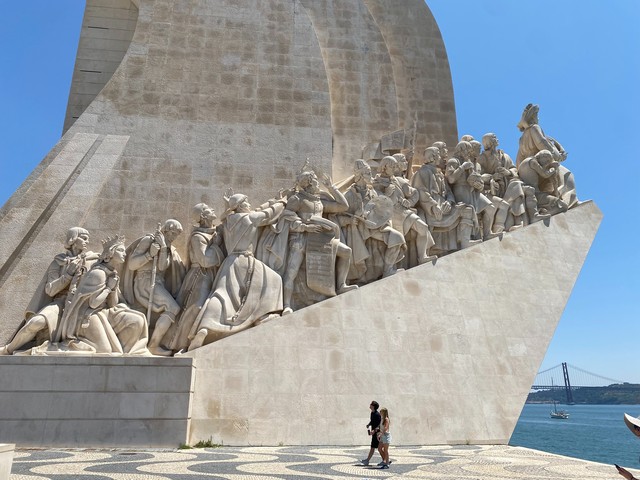
After lunch, we walked over to the Padrão dos Descobrimentos, a striking monument shaped like the prow of a sailing ship extending into the Tagus River. Standing 56 meters tall, it commemorates the Age of Discovery, when Portugal played a leading role in exploring the world’s oceans.
At the front of the monument stands Prince Henry the Navigator, leading a group of more than thirty figures – explorers, scientists, and royal patrons – all immortalized in stone. Each of them contributed to Portugal’s golden era of maritime exploration. The monument was inaugurated in 1960 to mark the 500th anniversary of Prince Henry’s death.
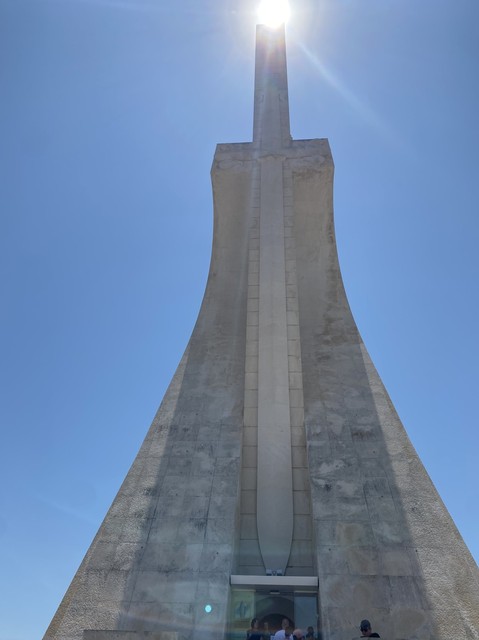
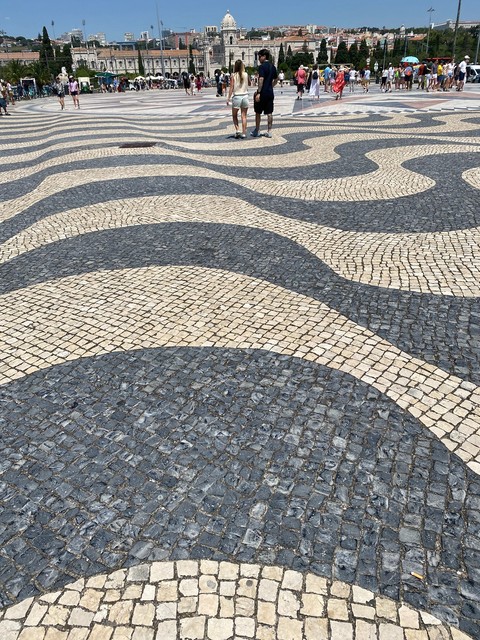
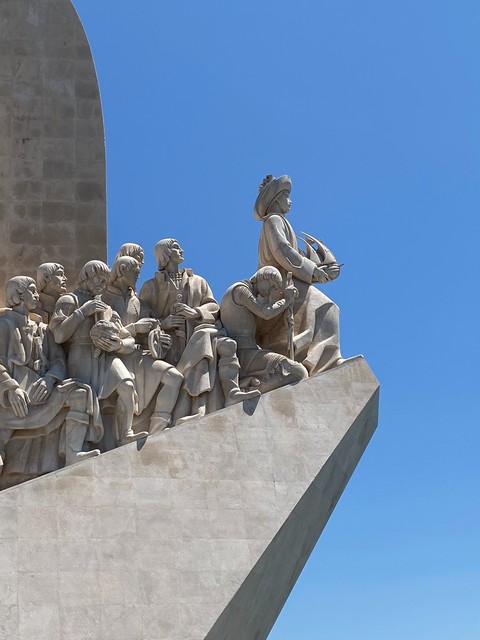
Inside the monument, an elevator takes visitors up to the observation deck, which offers a spectacular panorama of the Tagus River, Belém district, the Jerónimos Monastery, and the Belém Tower. From above, you can also admire the huge marble Compass Rose and world map laid out on the ground below – a stunning mosaic showing the routes and colonies of the Portuguese explorers.
Opening hours:
Tickets can be purchased on-site, but it’s much easier to buy them in advance from trusted platforms such as Tiqets, Freetour, or GetYourGuide. This way, you can skip the lines and make the most of your time in Belém.
After exploring and taking plenty of photos, it was time to return to the car and head to our next stop – the Christ the King Statue (Cristo Rei). We crossed the 25th of April Bridge, driving toward Almada.
Interestingly, crossing the bridge in this direction – from Belém to Almada – is free of charge; tolls are only collected on the return journey.
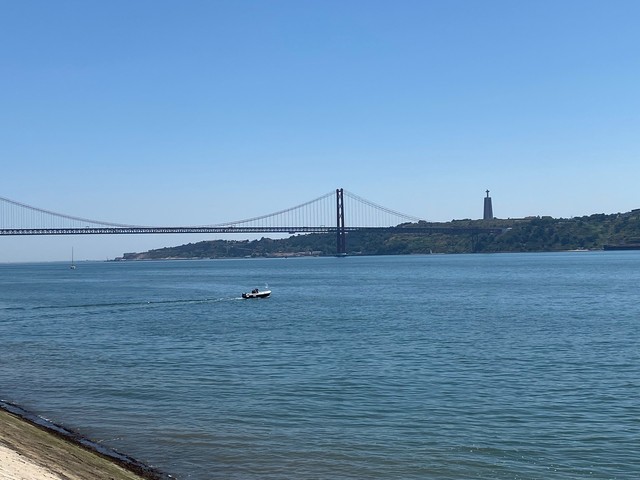
The 25th of April Bridge spans the Tagus River and connects Lisbon with the Setúbal Peninsula. Opened in 1966, the 2,277-meter-long suspension bridge was designed by the same engineering company that built the Golden Gate Bridge in San Francisco, which explains their remarkable resemblance. It’s one of Lisbon’s most recognizable landmarks and one of Europe’s busiest bridges, carrying more than 150,000 vehicles and hundreds of trains daily.
Originally named the Salazar Bridge, it was renamed after the Carnation Revolution in 1974, symbolizing the end of dictatorship and the beginning of democracy in Portugal.
Once we crossed the bridge, we found ourselves in Almada, home to the towering Christ the King Statue, which rises high above the Tagus and can be seen from many parts of Lisbon.
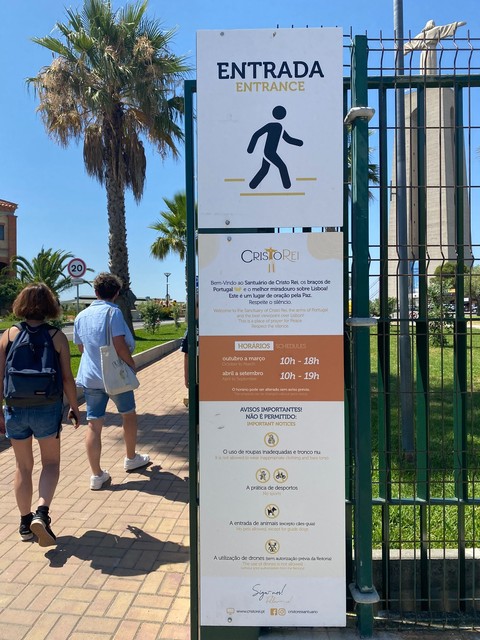
We easily found a parking spot near the entrance, and the area immediately felt very family-friendly – spacious, peaceful, and stroller-accessible. There are clean restrooms and a small café (Cerger Cafeteria) close to the gate, perfect for a quick refreshment before or after your visit.
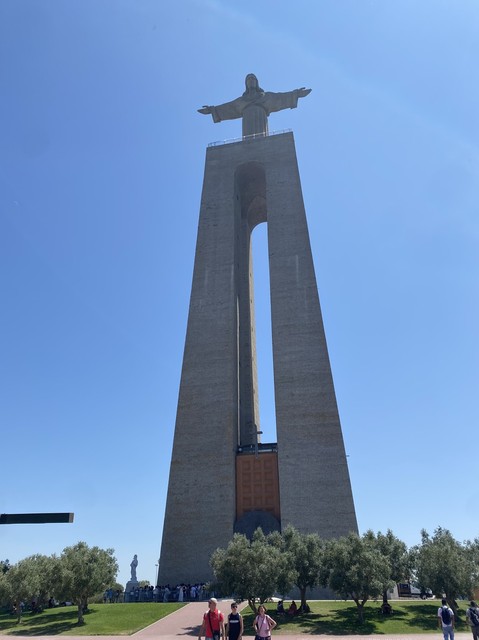
The Christ the King statue itself stands 28 meters tall on top of a 75-meter pedestal, bringing the total height to over 100 meters. The idea was inspired by the Christ the Redeemer statue in Rio de Janeiro, and it was inaugurated in 1959.
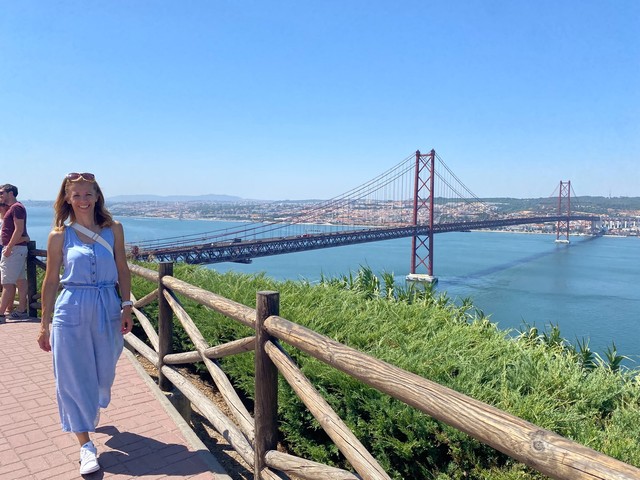
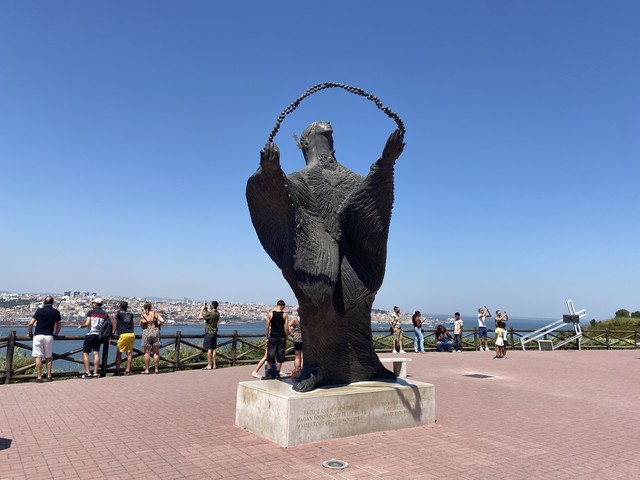
From the viewing terrace in front of the statue, you get breathtaking panoramic views: the shimmering Tagus River, the red 25th of April Bridge, and the entire Lisbon skyline spread out beneath you. To reach the top viewing platform, visitors can take an elevator (tickets sold separately on-site). There was quite a long queue when we arrived, so we decided to skip it this time.
The park area and the base of the statue are freely accessible, making it a great, low-cost activity for families. Even without going to the top, a short walk around and a few memorable photos make the visit worthwhile.
Opening hours: generally from 9:00 AM to 6:00 PM, with extended hours during the summer months.
A Peaceful End to the Afternoon
After visiting the statue, we decided not to stop at the busy café right next to it – it looked overcrowded and pricey. Instead, we drove a few minutes to a lovely, authentic spot called Rampa do Pragal, where we enjoyed ice cream, coffee, fresh drinks, and (of course!) a pastel de nata. It turned out to be a perfect choice – friendly service, cozy atmosphere, and great value for money.

If you’re visiting the Cristo Rei, I wholeheartedly recommend stopping by this café – whether for a full meal or just a refreshing break. It was the perfect way to wrap up our Lisbon afternoon before continuing our road trip south toward the Algarve.
On the Road to the Algarve
In the early evening, we set off for the southern coast – our next destination was Portimão, in the Algarve. The drive from Lisbon takes about 2.5 hours, and the main highways are well-maintained, making the journey smooth and comfortable. Our little one slept almost the entire way.
Since our morning got delayed due to the car pickup, we didn’t make it to the ocean as planned that afternoon, but we arrived at our accommodation around 7 PM – just in time for unpacking and a relaxed family dinner.
Family travel tip: if you’re driving long distances with young kids, plan a short break along the way. Portuguese highways have plenty of well-equipped rest areas, some even with playgrounds or grassy patches – perfect for letting little ones stretch their legs before the next part of the journey.
For our stay in the Algarve, we chose the Mirachoro Praia da Rocha Aparthotel. We booked our stay at Mirachoro Praia da Rocha through Booking.com, but you can also find great family deals on Expedia or Hotels.com.
Since my husband follows a special diet, having a kitchenette was essential for us – and this place was ideal. The hotel also offers breakfast, which you can pay for directly after eating, giving guests the flexibility to choose between self-catering and the hotel’s buffet.
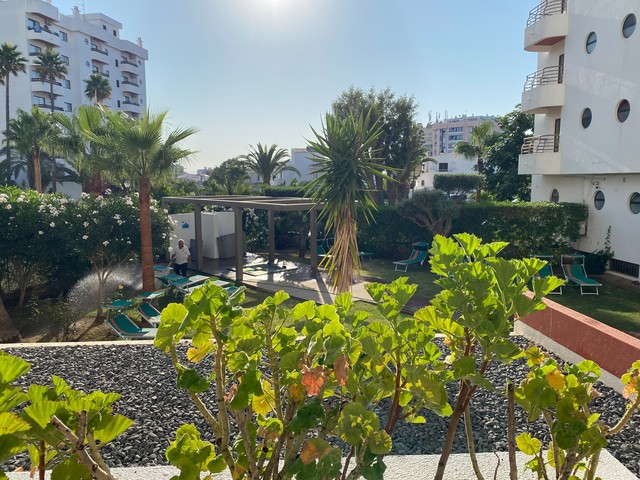
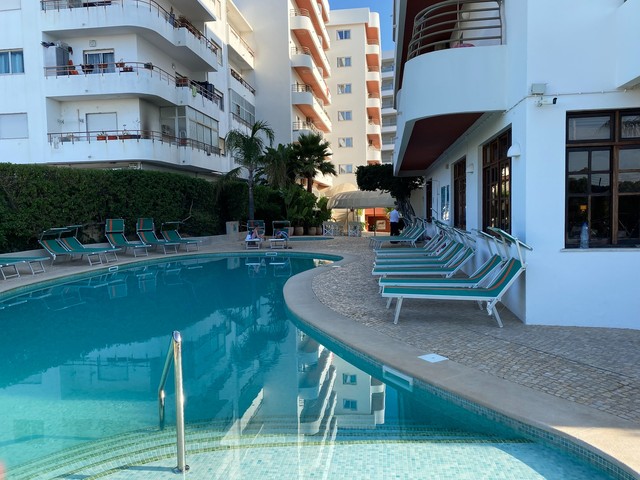
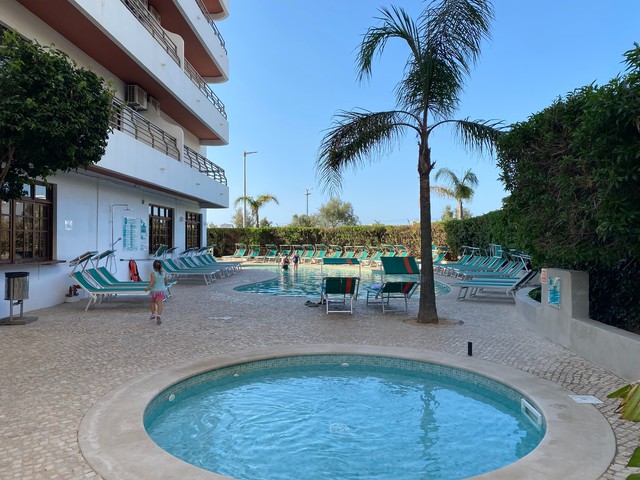
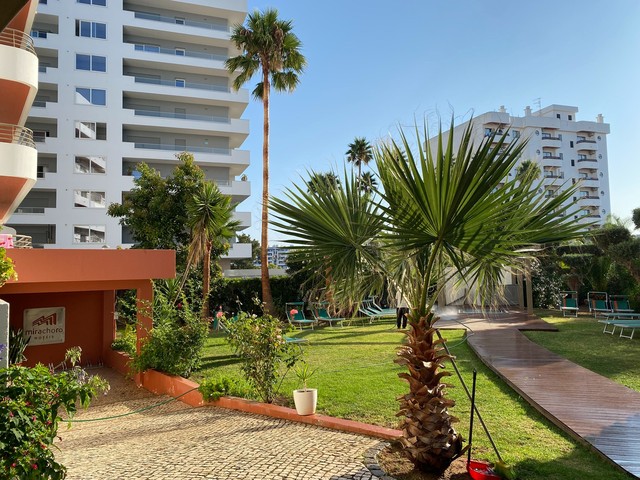
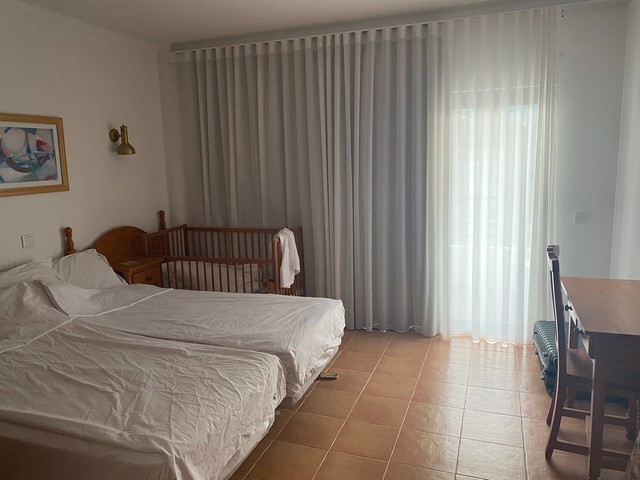
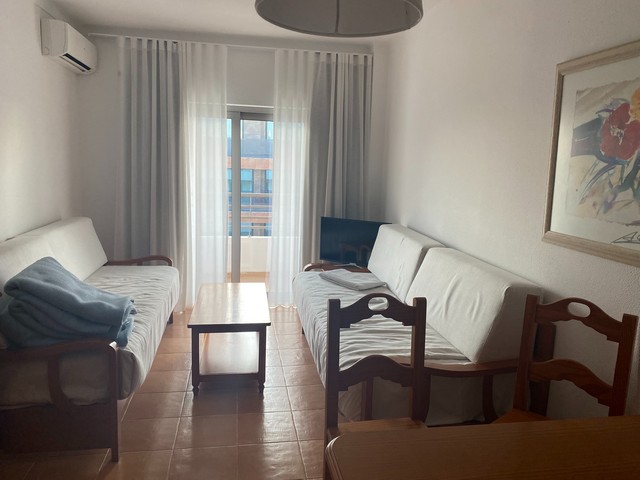
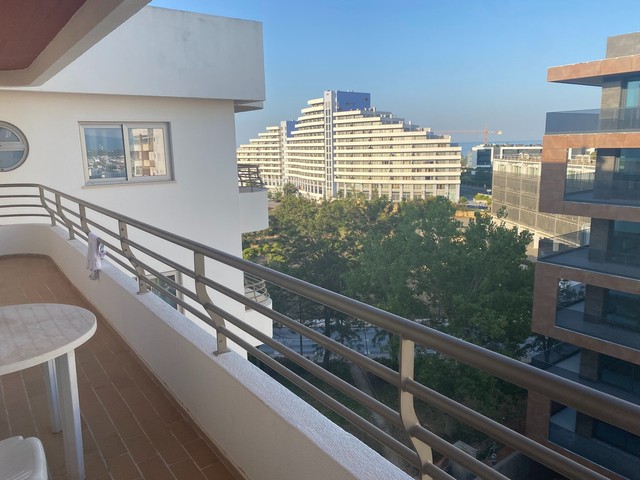


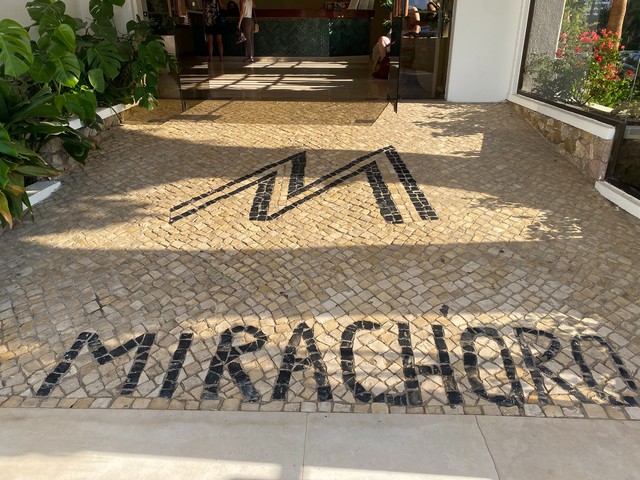
The aparthotel’s location is excellent: close to both the beach and Portimão’s town center, with private parking – a big plus if you’re traveling with a rental car.
The rooms were clean and spacious, the staff friendly and helpful. Overall, it offered great value for money – with good amenities, a lovely outdoor pool, and a small bar and snack bar that made relaxing at the hotel even more pleasant.
Some of the links in this post are affiliate links. This means we may earn a small commission at no extra cost to you. This helps support WanderingKite and allows us to continue sharing family travel tips and experiences.
Algarve with a Toddler – 6 Days of Beaches, Cities, and Family Adventures in Portugal
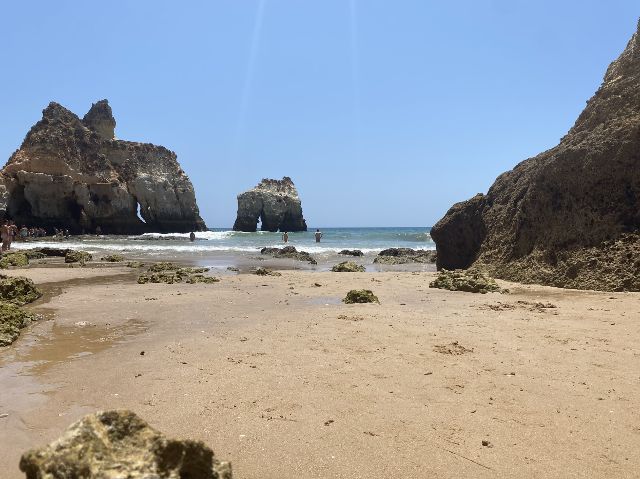
Day 2 in Portugal: Alvor, Praia dos Três Irmãos, Ferragudo & Portimão
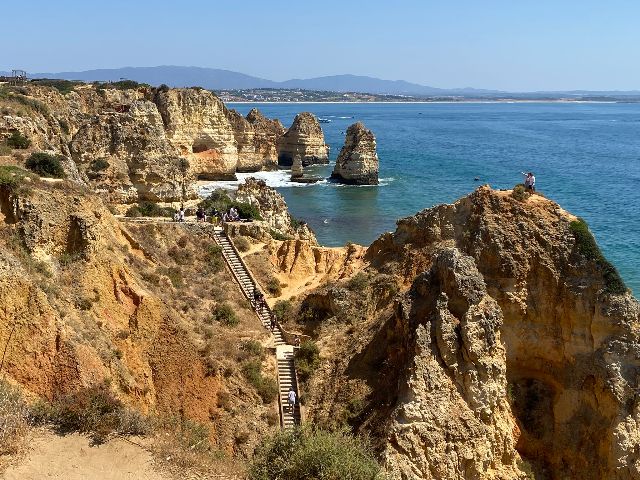
Day 3 in Portugal: Lagos, Ponta da Piedade & Praia dos Estudantes
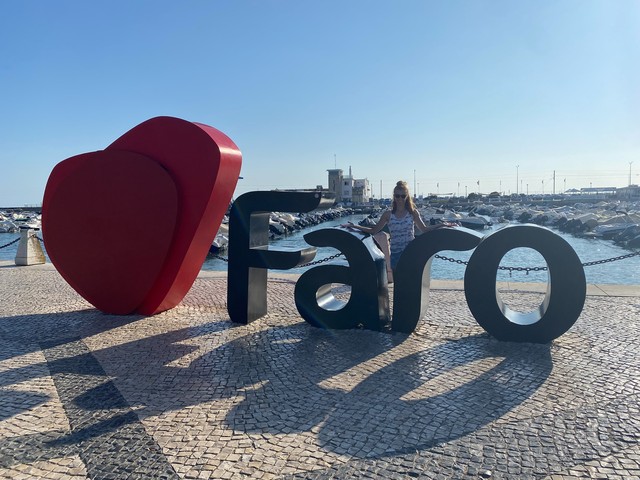
Day 4 in Portugal: Discovering Tavira’s Charm, Praia do Barril & Faro
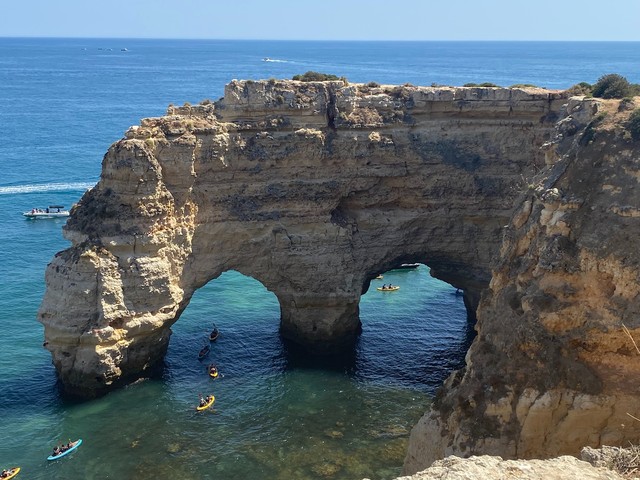
Day 5 in Portugal: Highlights of Carvoeiro, Benagil & Albufeira
Day 6–7 in Portugal: Portimão, Our Lisbon City Break & Cabo da Roca
@ Copyright - WanderingKite | All rights reserved! | Privacy Policy