
This post contains affiliate links. Full disclosure at the bottom of the page.
Explore our Day 1 highlights:
Basilica of Santa Maria Maggiore
A Taste of Rome: Dinner at Pummarola & Gelato at Della Palma
Piazza Venezia and the Colosseum under the Stars
Just a few minutes’ walk from our accommodation stands one of Rome’s most important churches, the Basilica of Santa Maria Maggiore. Even from a distance, it is an impressive sight with its grand scale and elegant façade, especially when illuminated by the evening lights.
This magnificent basilica, standing here for centuries, is a key site of Rome’s religious life and one of the four major papal basilicas of the city.
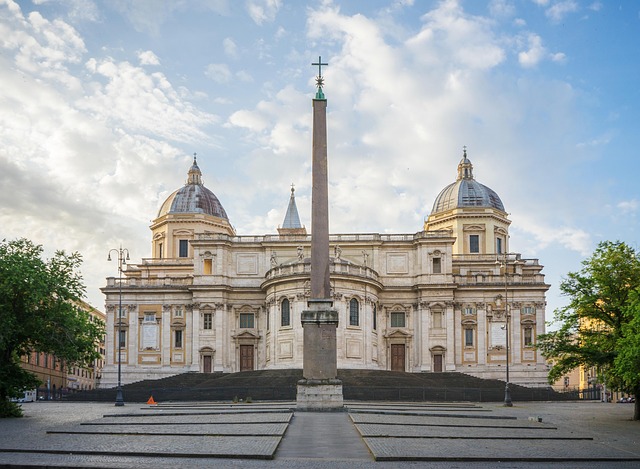
Although we couldn’t go inside this time, it was still awe-inspiring from the outside. If you have the chance, it is absolutely worth stepping in – the interior is adorned with richly decorated mosaics and a stunning gilded ceiling, offering a true journey back in time within this extraordinary building that preserves both history and faith.
While the Basilica is free to enter, I suggest booking a tour on GetYourGuide or on Tiqets, if you want to see the hidden gems like the Loggia or the mosaics. It’s much easier to compare options there in advance.
Towards the heart of the city – walking to the Trevi Fountain
Leaving the spacious square of Santa Maria Maggiore behind us, we continued our walk through Rome’s atmospheric streets. Using the map provided by our accommodation, we had already marked out our route for the day, with our next stop being one of Rome’s most iconic landmarks: the magical Trevi Fountain.
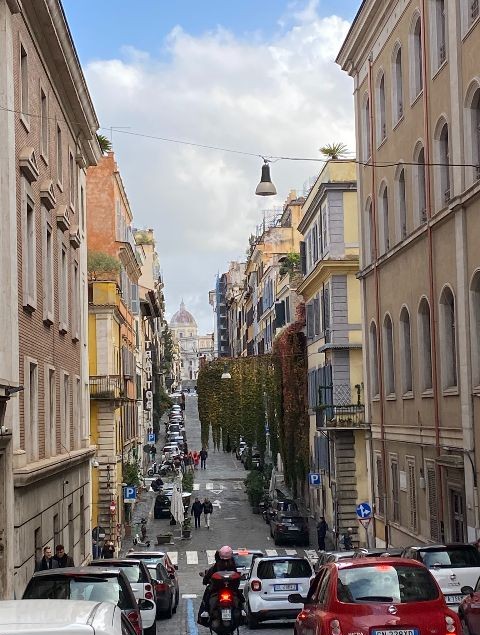
As we walked along Via Agostino Depretis, we couldn’t help but glance back at the basilica’s impressive dome, which still looked majestic from afar. From the stroller, Liny quietly observed the world around her, while we moved forward at the city’s gentle rhythm, soaking in the unmistakable Roman atmosphere.
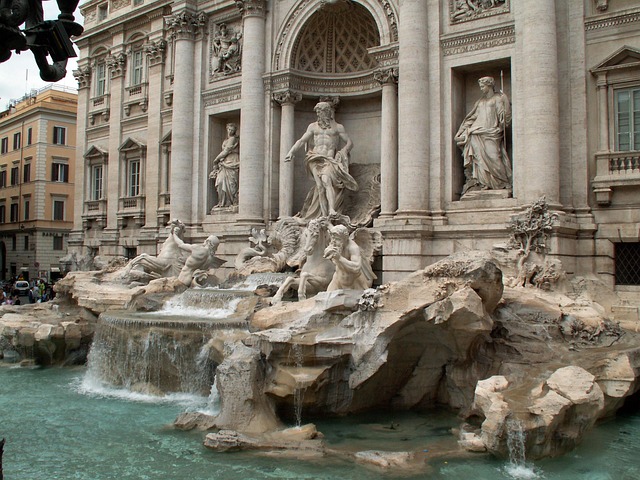
The Trevi Fountain (Fontana di Trevi) is one of Rome’s most famous and most visited attractions. It captivates visitors instantly, not only with its impressive size but also with its unique and enchanting atmosphere. This monumental Baroque masterpiece is approximately 26 metres high and nearly 50 metres wide, dominating the square as it leans against the back of Palazzo Poli. The fountain was built based on the designs of Italian architect Nicola Salvi.
At the centre of the composition stands Oceanus, the mythological god of the seas, riding a massive shell-shaped chariot. Around him, water creatures and rearing wild horses symbolise the untamed power of the sea.
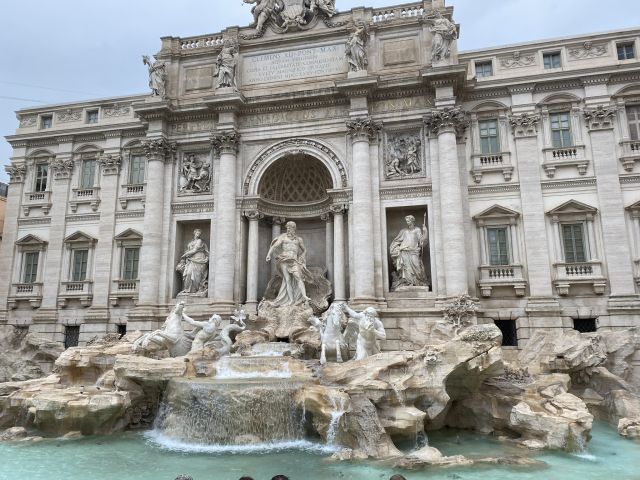
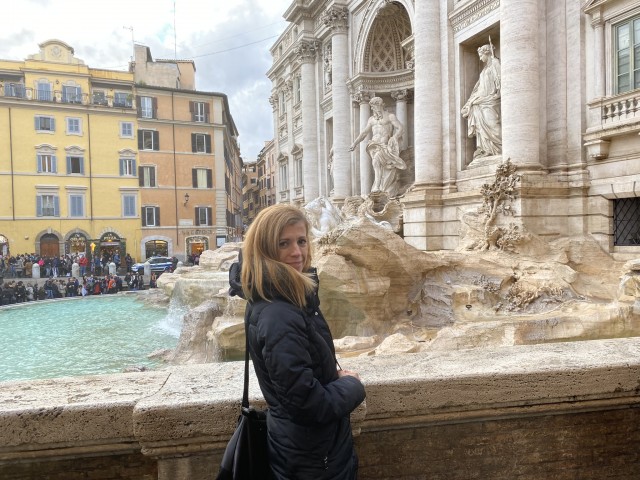
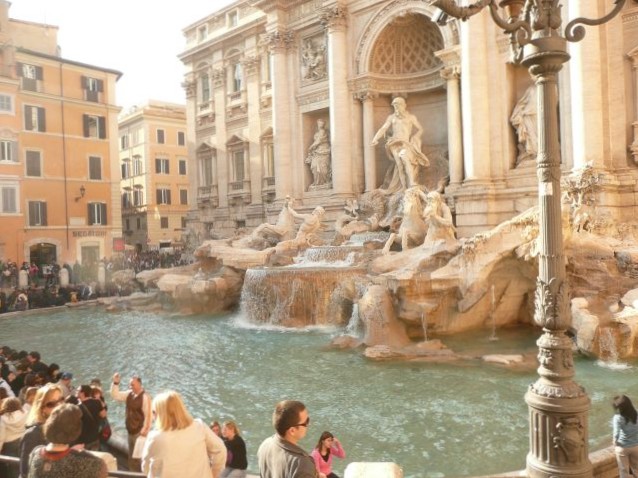
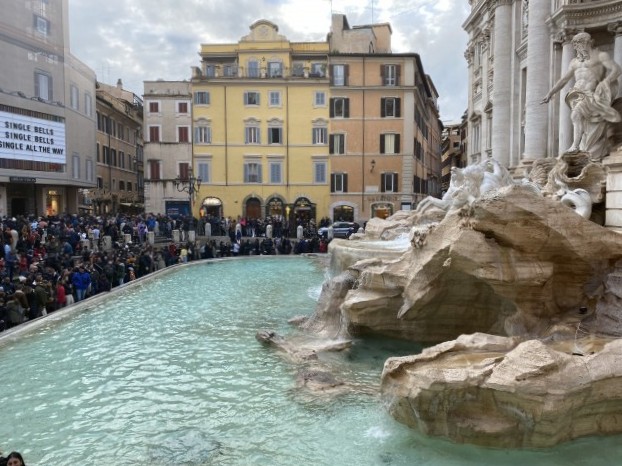
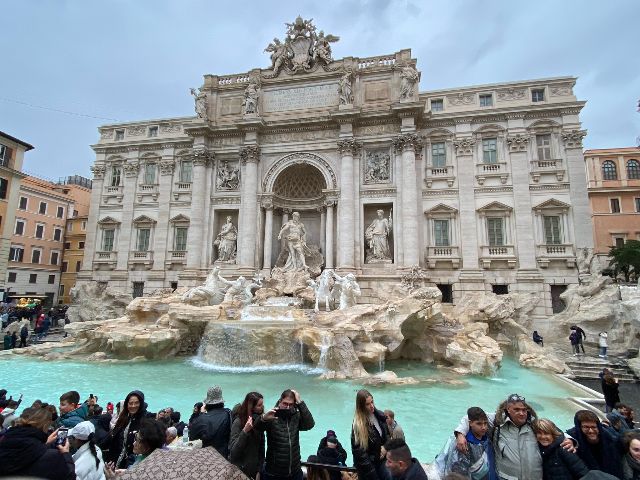
The name “Trevi” is no coincidence: the fountain was built at the junction of three roads, and this very meeting point made it possible for one of Rome’s most important aqueducts to bring fresh water here. Visitors traditionally toss a coin into the water – according to legend, this ensures a return to Rome one day. Each day, thousands of euros can accumulate this way, which the city donates to social causes.
As we visited in December, we were lucky enough to avoid the huge crowds. This allowed us to truly enjoy the magic of the Trevi Fountain in a calm and relaxed way. We spent a long time admiring the intricate details of this more than 300-year-old masterpiece, listening to the soothing sound of the flowing water. These moments stayed with us, which is why we returned the following evening as well, when the decorative lighting brings the sculptures and the water to life. Both by day and by night, the atmosphere was simply perfect.
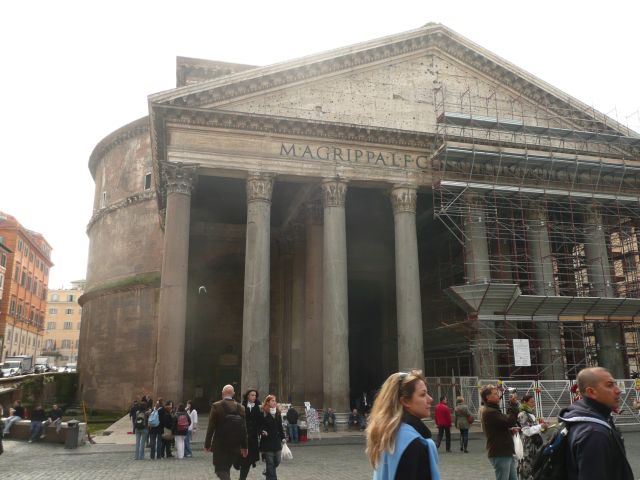
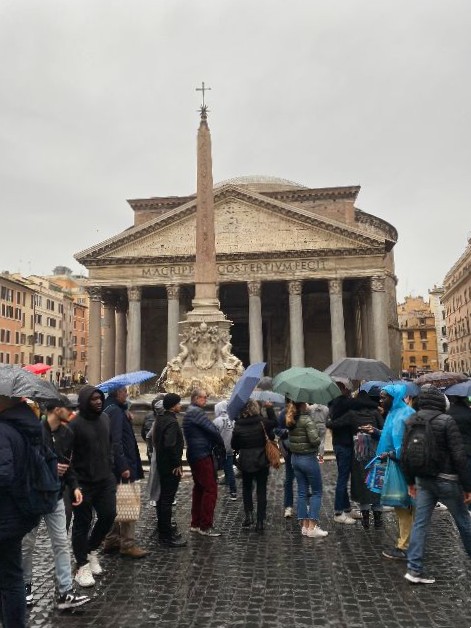
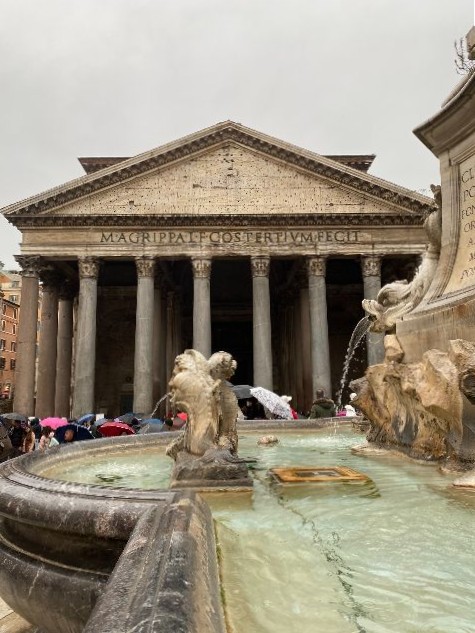
As mentioned above, in the historic centre of Rome, one remarkable sight follows another. After just a few minutes’ walk through Rome’s enchanting narrow streets, we found ourselves standing in front of the unique circular temple of the Pantheon.
The Pantheon is not a showy attraction; rather, it is a quiet, timeless wonder.
It is astonishing how “alive” this ancient temple still feels today: the same proportions, the same perfect geometry that the Romans themselves saw more than two thousand years ago. Originally built as a temple dedicated to all gods, it was later rebuilt by Emperor Hadrian.
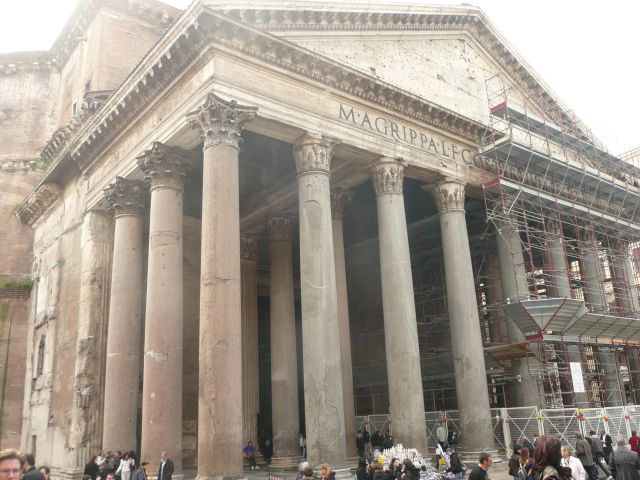
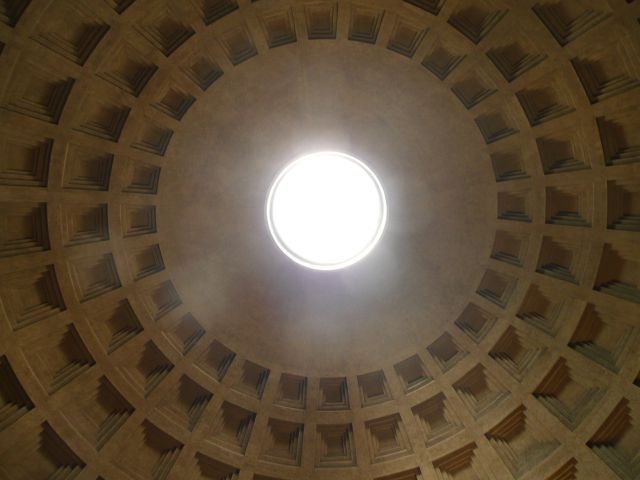
The dome alone is an engineering marvel — the largest unreinforced concrete dome in the world, and for centuries the largest dome ever built. At its centre is the oculus, the only source of natural light. The light streaming through it gently draws the eye upward, creating a calm, almost meditative atmosphere.
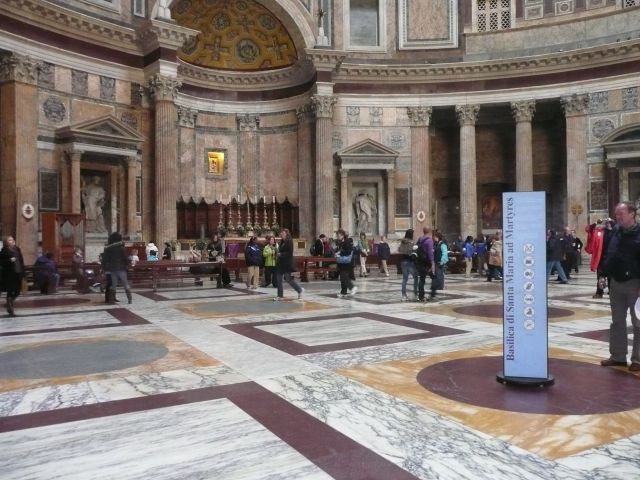
The Pantheon has survived barbarian invasions, the Middle Ages, and the storms of history, partly because it was consecrated as a Christian church. Today, it is at once a sacred place, a royal memorial, and a pilgrimage site for art lovers. Among those laid to rest here is Raphael himself.
One particularly special event is the Rose Ceremony held after Pentecost, when Roman firefighters scatter rose petals through the oculus into the interior of the church, symbolising the descent of the Holy Spirit. It is a rare and deeply moving sight.
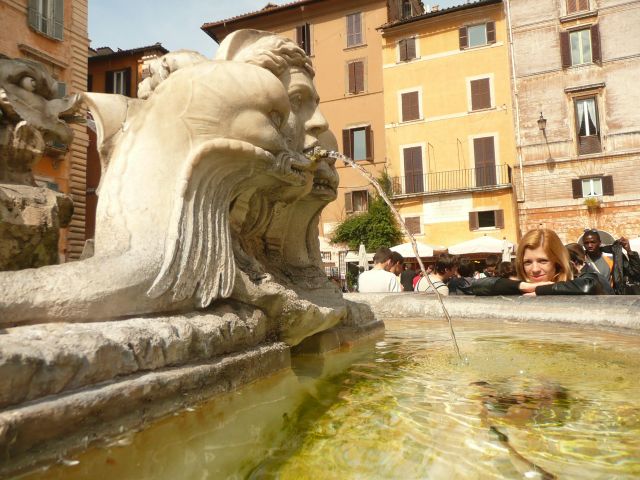
The square in front of the Pantheon, Piazza della Rotonda, is one of Rome’s liveliest squares, yet it is also a place where you instinctively slow down. We stopped here for a short rest, sat for a while, observed the scene around us, and admired the Renaissance fountain at the centre of the square, crowned with a 16th-century Egyptian obelisk. It felt good simply to be present — to watch the square, absorb the atmosphere, and feel the gentle pulse of Rome.
Since July 2023, entry to the Pantheon requires a ticket. To avoid long queues at the site, I highly recommend booking your entry in advance. You can find great ‘skip-the-line’ options and guided tours on platforms like Tiqets or GetYourGuide, where you can easily compare prices and time slots
After this short break, we headed towards Piazza Navona, but before reaching the square, we stopped for dinner at a truly pleasant place. Pummarola Ristorante Pizzeria turned out to be a great choice for us. Located just a short walk from the Pantheon, it makes an ideal stop during a city walk. The service was kind and attentive, a high chair was provided, and the restaurant was clearly baby-friendly.
At the outdoor tables, they used heating lamps and even offered blankets, which allowed us to dine comfortably despite the cooler weather. This thoughtful attention to detail really stood out — a small gesture, yet one that means a lot, especially when travelling with a young child.
We had read a few negative reviews beforehand, but these mostly referred to the busy summer season, when city-centre restaurants are understandably under more pressure. We experienced none of that. The atmosphere was friendly, the food was delicious, and the service was smooth and relaxed. Even if we had had to wait, it wouldn’t have bothered us — we were simply enjoying the calmer, wintertime rhythm of Rome.
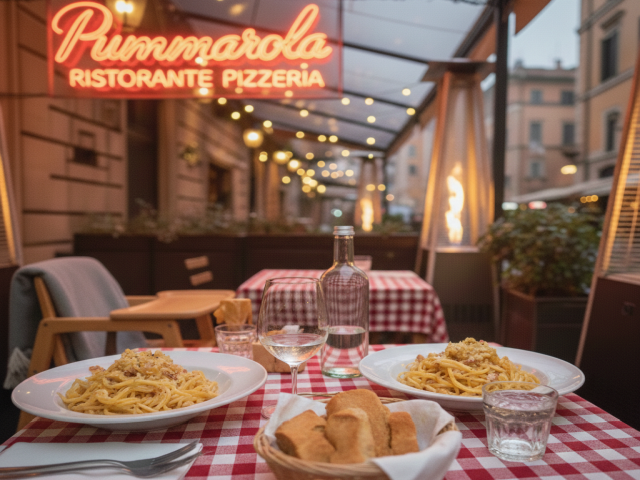
If you’re looking for a dinner spot near the Pantheon, we think Pummarola Ristorante Pizzeria is a very solid choice.
After dinner, craving something sweet, we stepped into the Gelateria Della Palma right next door. We were genuinely amazed — it’s rare to see such an enormous selection. As the eye-catching sign by the entrance proudly announces, you can choose from 150 different gelato flavours. Here, every ice-cream lover’s dream can come true: from refreshing fruit sorbets to creamy classics, nutty specialities, and truly unique combinations, there is something for everyone.
The atmosphere is calm and welcoming, making it a perfect spot for a short break while exploring the city. Highly recommended for locals and visitors alike.
Piazza Navona is one of Rome’s most spectacular and distinctive squares — a true jewel of the Baroque cityscape. We arrived here on our very first day, in the glow of the evening lights. The square revealed a completely different side of itself: the soft street lighting, live music, street performers, and cafés buzzing even after dark all come together to create the vibrant atmosphere that defines this place both day and night.
The square’s unusual oval shape is no coincidence. Piazza Navona follows the exact outline of the ancient stadium built by Emperor Domitian in AD 86, once the venue for athletic competitions and horse races.
The elegant façade of the Church of Sant’Agnese in Agone provides a beautiful architectural frame for the square, but the true highlights of Piazza Navona are undoubtedly its fountains, which form a visual sequence along its length. Three monumental fountains can be found here: the Fontana del Moro at one end, the Neptune Fountain (Fontana del Nettuno) at the other, and at the centre of the square, Bernini’s breathtaking Fountain of the Four Rivers.
The Fontana dei Quattro Fiumi is remarkable not only for its size. The sculptures personify the four great rivers known at the time — the Danube, the Ganges, the Nile, and the Río de la Plata — dramatically encircling the obelisk. Illuminated in the evening, the fountain was particularly captivating.
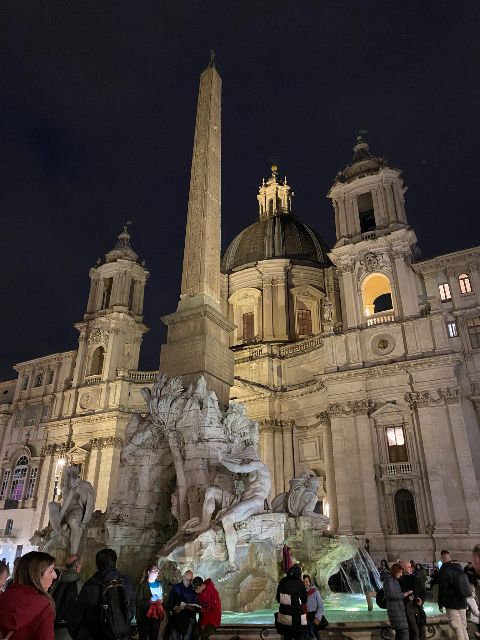
The outdoor tables of the cafés and restaurants surrounding the square are undeniably inviting, although prices here tend to be slightly higher. Many visitors are happy to pay this “experience premium” for the atmosphere alone. Even in winter, the terraces were full. Whether you simply walk across the square or sit down for a drink, Piazza Navona is one of those places in Rome that simply cannot be missed.
Travelling with a young child and moving at stroller pace naturally meant that less fit into a single day. Fortunately, we still had another day and a half in Rome. That evening, with darkness falling early in December, we decided around six o’clock to slowly make our way back towards our accommodation.
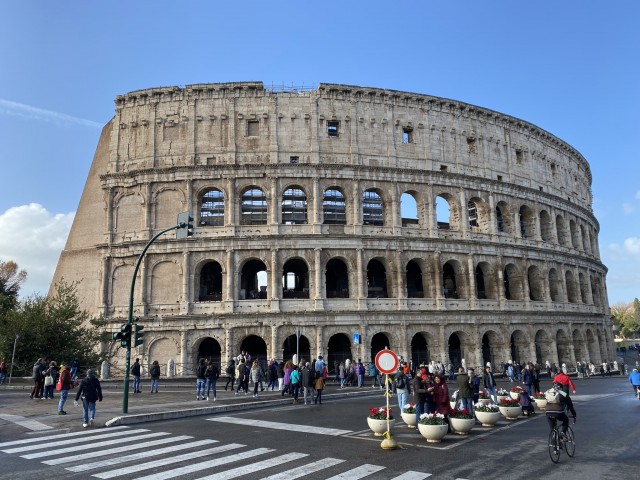
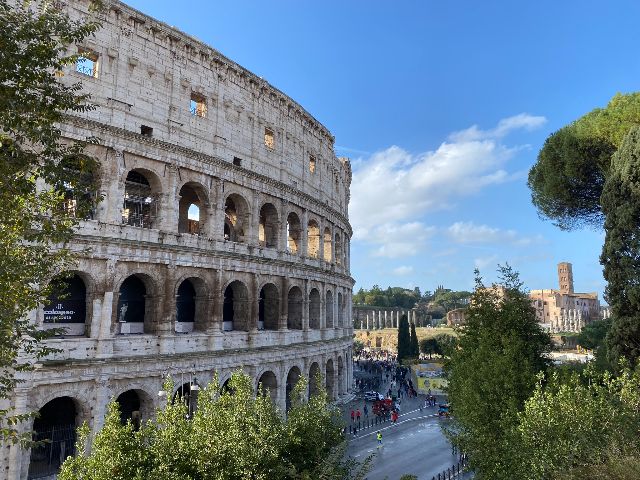
On the way, we passed Piazza Venezia and the Colosseum. We knew we would return to both locations during daylight over the following days, but on this evening, heading back to our accommodation, we made a small detour to admire these two iconic landmarks illuminated at night.
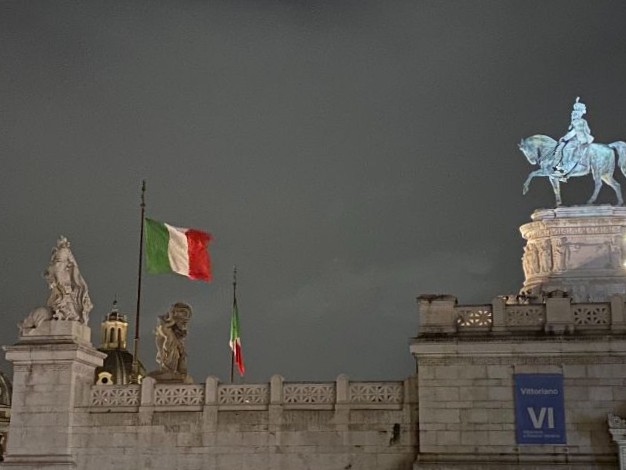
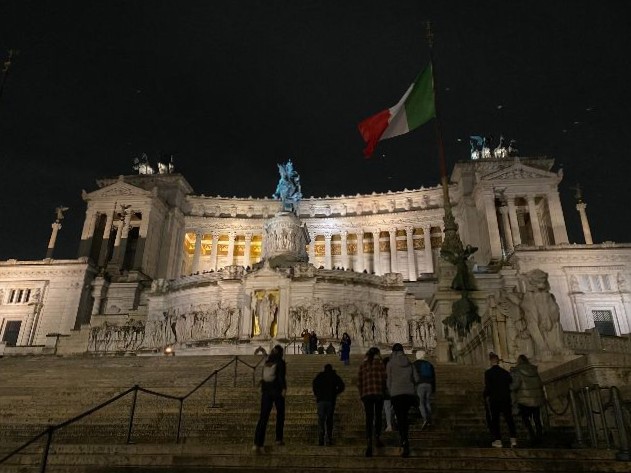
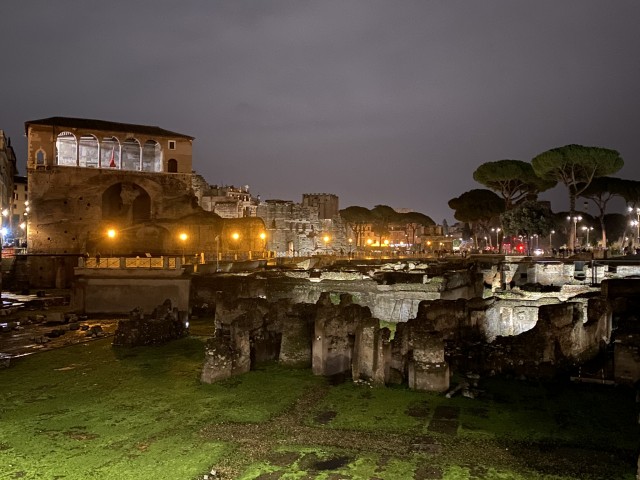
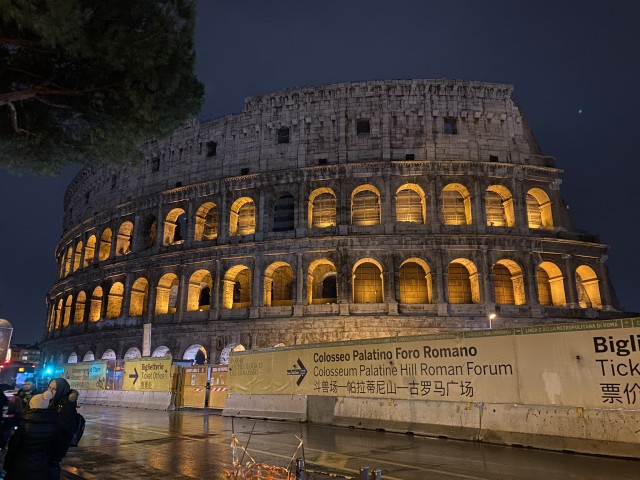
Piazza Venezia felt especially monumental: the vast open space, the pulse of traffic, and the striking contrast between the surrounding streets and the evening illumination of the white marble Vittorio Emanuele II Monument (Altare della Patria) left a strong impression on us. Just a few minutes later, the lights of the Colosseum came into view — an absolutely breathtaking sight.
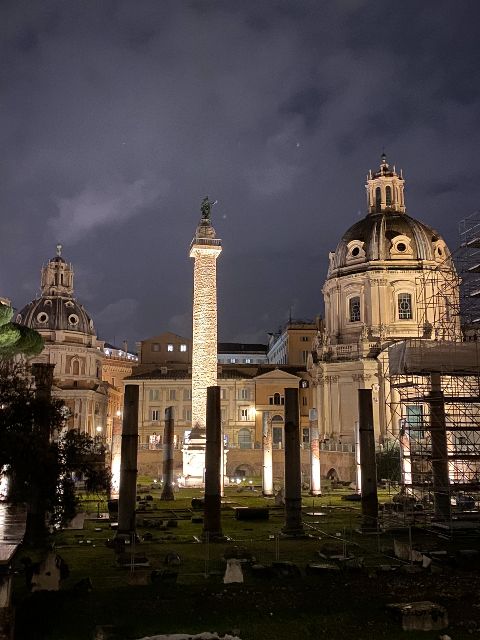
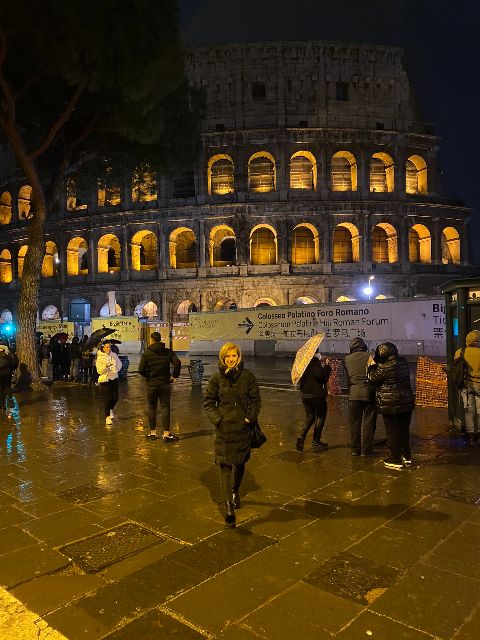
A more in-depth exploration was saved for the morning of our departure, when we had time to discover this part of Rome at a relaxed pace in daylight. That evening walk was just a taste of what still awaited us.
The stroller walk and the full day of experiences pleasantly tired all of us, so once we arrived back at our accommodation, it felt good to rest. The next day, refreshed and re-energised, we continued discovering Rome.
Some of the links in this post are affiliate links. This means we may earn a small commission at no extra cost to you. This helps support WanderingKite and allows us to continue sharing family travel tips and experiences.
@ Copyright - WanderingKite | All rights reserved! | Privacy Policy