One Day in Alicante (Part 1): A Family Day Trip from Valencia

This post contains affiliate links. Full disclosure at the bottom of the page.
In this post:
Mushroom Street (Calle San Francisco)
Plaza del Ayuntamiento & Basílica de Santa María
Playa del Postiguet (Beach Playground)
Next Stop: Benidorm & Balcony of the Mediterranean
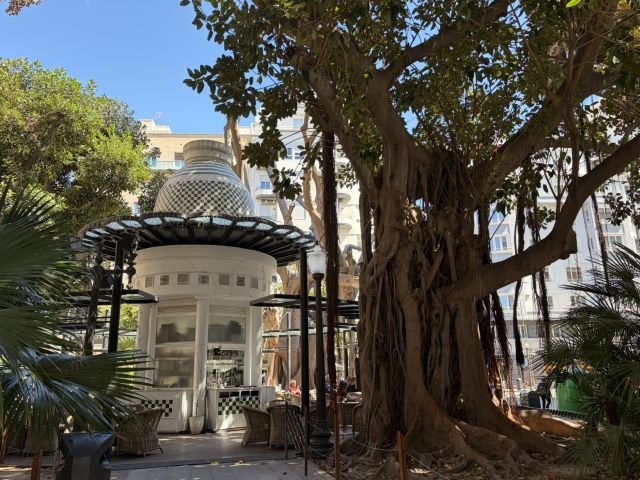
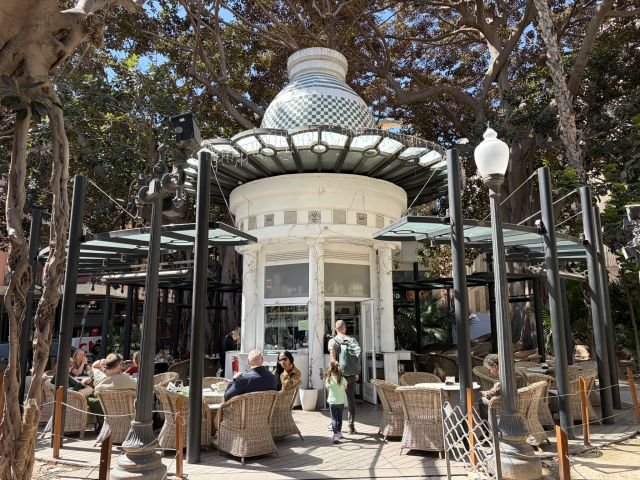
After visiting the cathedral, we walked through Portal de Elche, one of Alicante’s loveliest little squares.
This peaceful spot feels like a hidden oasis in the middle of the city. Huge, shady fig trees create a cool canopy above the square, while an elegant kiosk and a fountain add to its relaxing atmosphere. It’s the perfect place to escape the heat for a few minutes during a day of sightseeing.
From there, it was only a short walk to our next stop—a well-deserved food break.
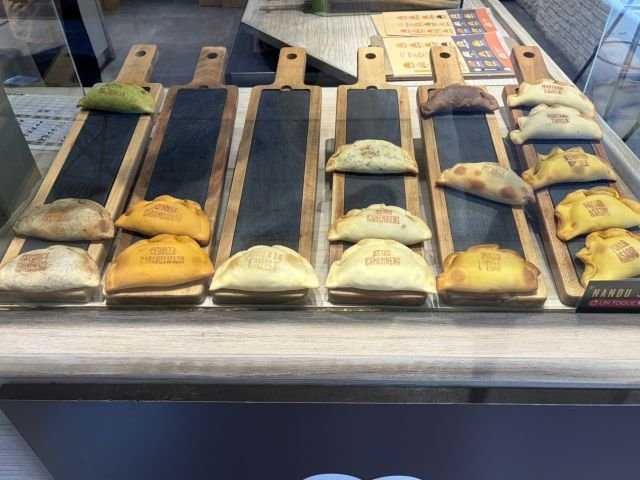
We stopped at Las Muns, where we tasted delicious empanadas (or, as we like to call them, little savoury pastry pillows). A good cup of coffee helped us recharge before continuing our walk, while the sweet-toothed members of our family couldn’t resist visiting a nearby café for waffles and pancakes.
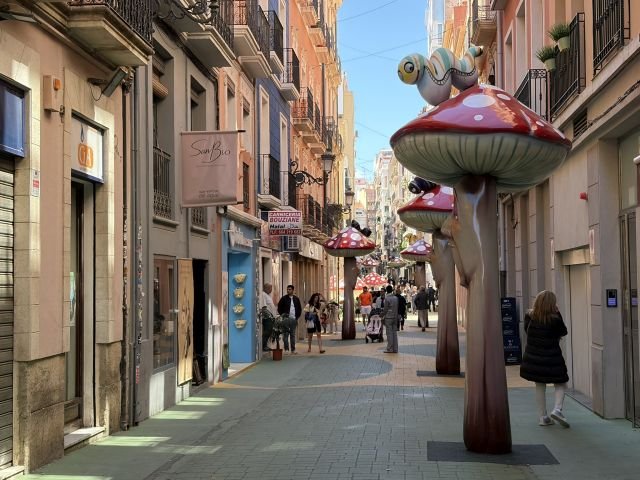
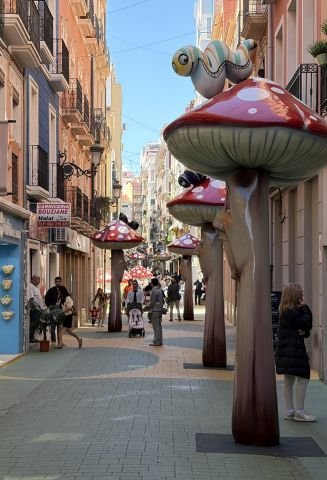
One of the most fun and memorable stops of the day was undoubtedly Calle San Francisco, better known as Mushroom Street.
The road is painted in cheerful shades of yellow and green, while giant colourful mushroom sculptures line the pavements. Their oversized hats and playful designs instantly create a magical atmosphere.
The street was transformed in 2013 as part of an urban regeneration project designed to bring new life to the city centre. The giant mushrooms are more than just decorations—some even provide shaded seating underneath.
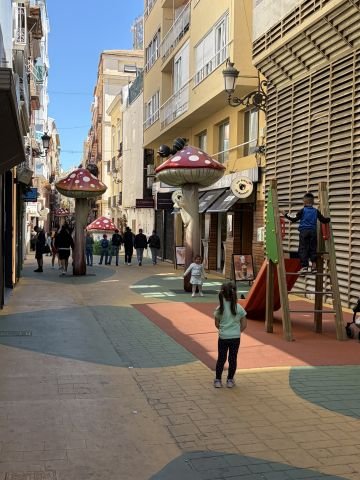
Our daughter was completely fascinated. Every few metres we had to stop so she could run around another mushroom, climb on the sculptures, or admire their funny shapes.
The street is also lined with inviting ice cream shops, waffle cafés and small boutiques. Besides the famous mushrooms, we also discovered plenty of charming little details decorating the surrounding buildings.
Mushroom Street may not be one of Alicante’s traditional historical attractions, but it’s certainly one of its happiest and most unique places. If you’re visiting Alicante—especially with children—it’s definitely a stop you shouldn’t miss.
Around 1 p.m., after our fun stop on Mushroom Street, we headed to another peaceful corner of Alicante – Plaza de Gabriel Miró. From here, we slowly made our way back towards the harbour, although we still had several wonderful stops ahead of us.
It’s hard to imagine today, but centuries ago this area was part of Alicante’s old harbour, where small boats once docked and the city’s dry dock was located. In the early 20th century, it was transformed into the elegant square you see today. It was named after the famous local writer Gabriel Miró, although many locals still refer to it as Post Office Square because of the impressive Modernist former post office building nearby.
The real stars of the square are the enormous Moreton Bay fig trees (Ficus macrophylla). Their twisting aerial roots look as if they belong in a fantasy film rather than the middle of a city. Despite their name, these trees don’t produce edible figs—instead, they create a huge natural canopy that provides welcome shade on warm days.
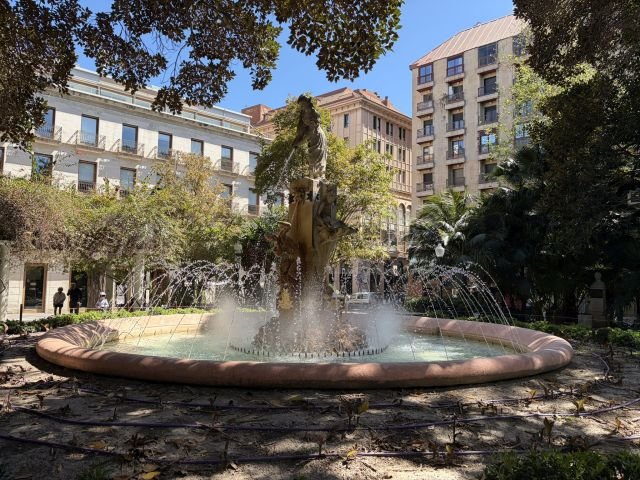
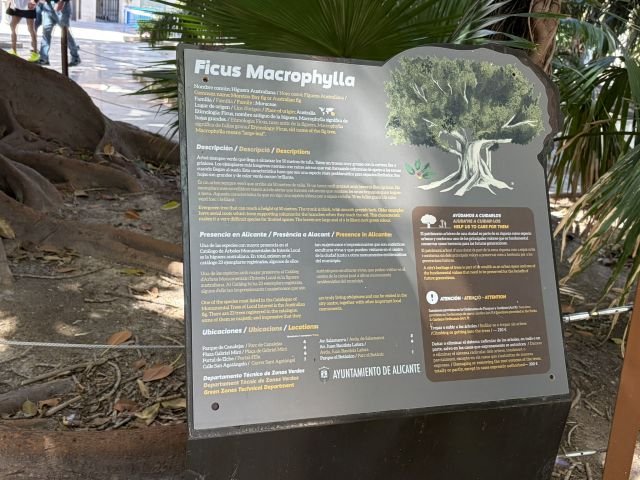
In the centre of the square stands the Woman Water Carrier statue, a charming monument commemorating the development of Alicante’s drinking water system. We spent a few peaceful minutes here, listening to the gentle sound of the fountain before continuing our walk.
This is probably Alicante’s most photographed location—and for good reason. Stretching for more than half a kilometre alongside the marina, the Explanada de España is one of the city’s most iconic landmarks.
Its famous wave-shaped pavement is made from an incredible 6.6 million marble tiles. The red, cream and black mosaic was designed to resemble the movement of the Mediterranean Sea. Although it was inspired by the promenades of Lisbon, it has developed a character all of its own under the Spanish sunshine.
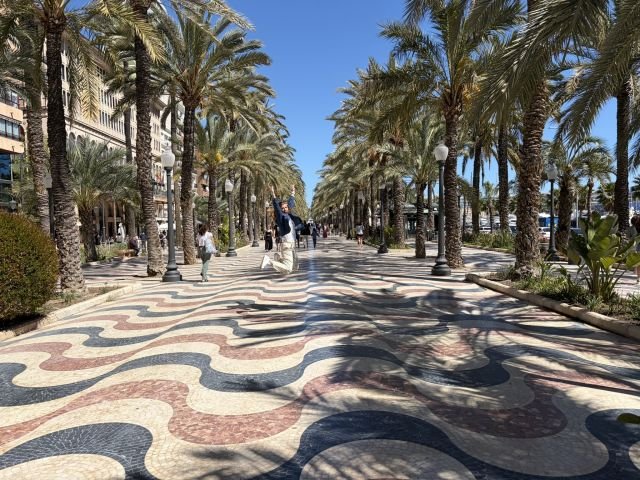
After our break on Mushroom Street, we simply slowed down and enjoyed the atmosphere. Beneath the rows of palm trees, local artisan stalls—often called the „hippie market”—offered everything from handmade jewellery to delicious local treats.
Before heading back towards the harbour, we made a short stop at Plaza del Ayuntamiento. The square is dominated by Alicante’s beautiful 18th-century Baroque Town Hall, whose twin towers and elegant façade make it look more like a palace than a government building.
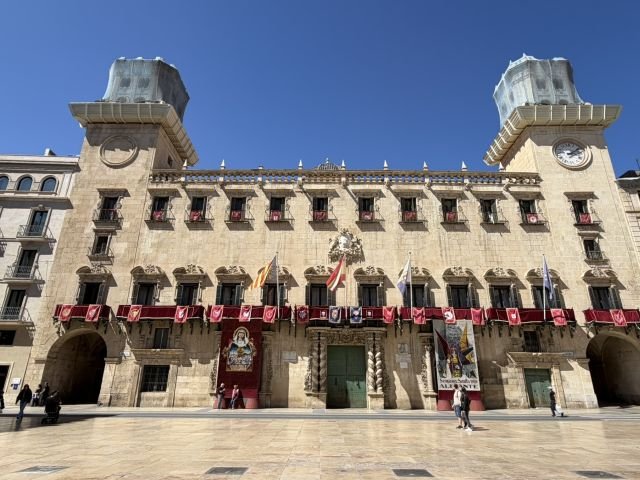
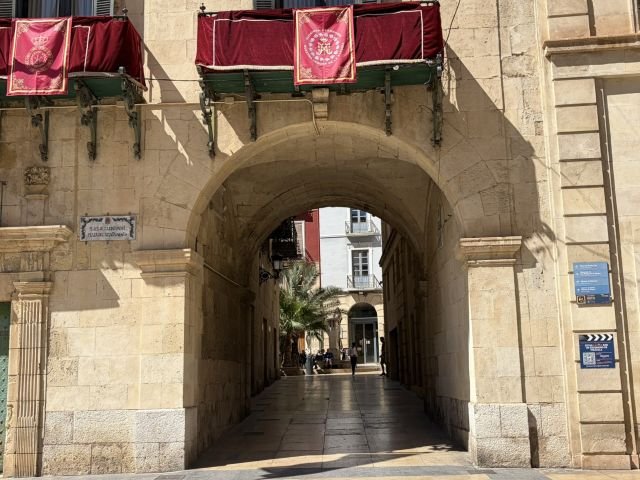
An interesting fact is that this is home to one of Spain’s official cota cero (zero-level) reference points, used to measure elevations above sea level across the country. We didn’t go inside this time, but the building was impressive enough just from the outside.
Basílica de Santa María
Just a few steps away stands Alicante’s oldest church, the Basílica de Santa María. Built in the 14th century on the site of a former mosque, it is one of the city’s most important historic landmarks. If you look closely, you’ll notice that its two bell towers are completely different—they weren’t built at the same time.
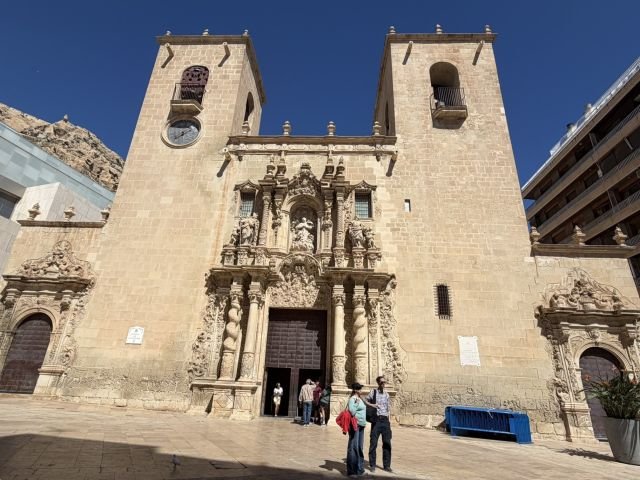
Although visitors can climb the tower for panoramic views of Alicante (€6, free for children under 12), we decided to skip it this time because we had another important mission ahead—a visit to the beach playground.
Tip: If you’d like to learn more about the history of this area, you can book a great local walking tour on Freetour.
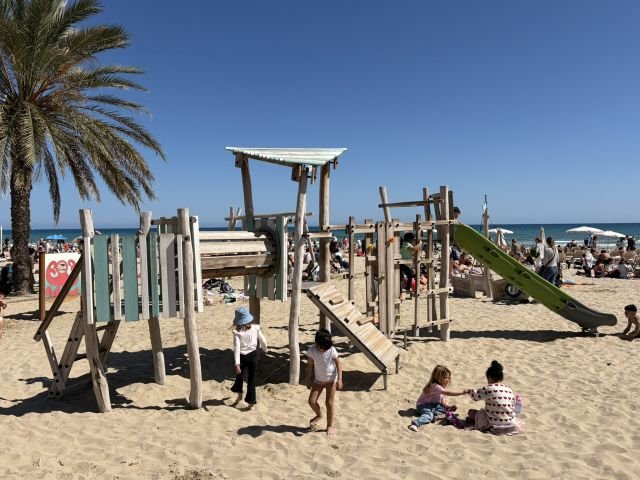
Eventually, we returned to the seafront promenade we had admired earlier that morning. We had promised our daughter we’d come back before leaving Alicante, and of course we couldn’t disappoint her.
She spent about twenty happy minutes climbing, playing and building sandcastles on the soft sand of Playa del Postiguet while we enjoyed one last moment by the Mediterranean. It was the perfect break—she could burn off some energy, and we could soak up the sea breeze before our drive.
Travel tip:
If you’re leaving Alicante by car, the beachfront playground is a fantastic place to let little ones run around before the journey. There are also foot showers nearby, making it easy to rinse off the sand and keep your rental car clean.
On our way back to the car, we stopped to admire one of Alicante’s most recognisable buildings, Casa Carbonell. Built in 1924, this elegant white palace immediately catches the eye with its graceful Neo-Baroque architecture and distinctive towers.
The building is also surrounded by a fascinating local legend. According to the story, wealthy textile businessman Enrique Carbonell was once refused a room at a nearby hotel because he looked too modestly dressed. In response, he built this magnificent mansion right next door—a building that has since become one of Alicante’s most iconic landmarks.
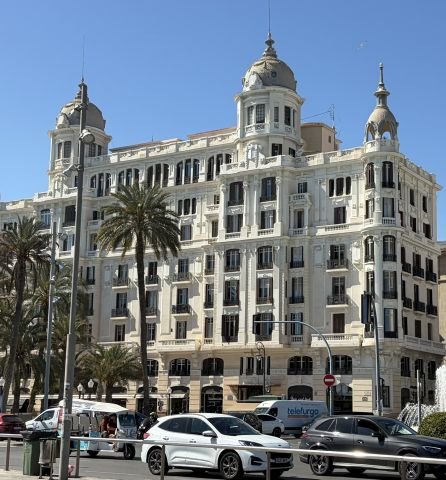
Before getting back into the car, we stopped to take a few final photos. The white façade framed by palm trees and the brilliant blue sky provided the perfect farewell to our wonderful day exploring Alicante.
Around 4 p.m., we said goodbye to Alicante, but our day was far from over. On our way back to Valencia, we made one final stop in Benidorm, the city famous for its impressive skyline of skyscrapers, where we planned to end this wonderful day with a relaxing evening stroll and a delicious dinner.
Tip: Since we were exploring multiple stops along the coast, having a rental car was essential. We booked ours through QEEQ, but it’s always worth comparing rates on Economy Bookings or Booking.com’s car rental platform for the best Costa Blanca deals.
The drive between Alicante and Benidorm takes only about 30 minutes—just enough time for our daughter to enjoy a short nap in the car, so we all arrived refreshed and ready for one last adventure.
Parking in Benidorm
After arriving in the city, we parked in a centrally located underground car park.
Travel tip: Don’t leave parking to chance! We had already chosen our car park in advance, which saved us from driving around in heavy traffic looking for a space. When you’re travelling with a young child, little things like this make the day much more relaxed.
The Balcony of the Mediterranean – Balcó de la Mediterrània
From the city centre, we made our way straight to Mirador del Castell, better known as the Balcó de la Mediterrània (Balcony of the Mediterranean).
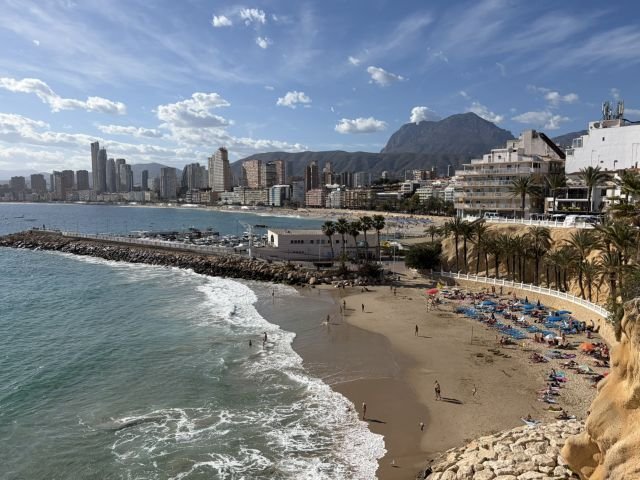
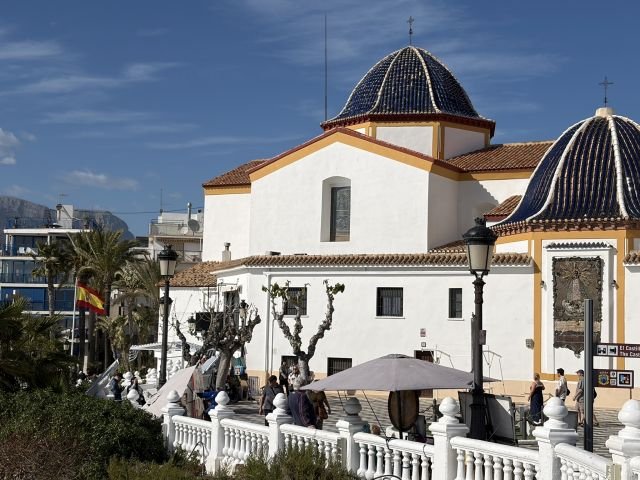
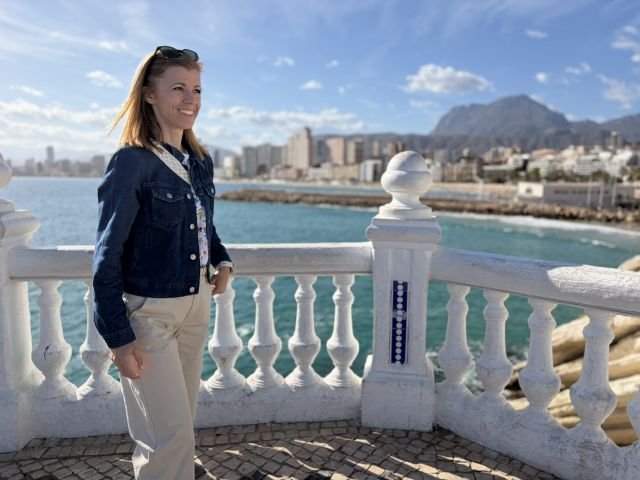
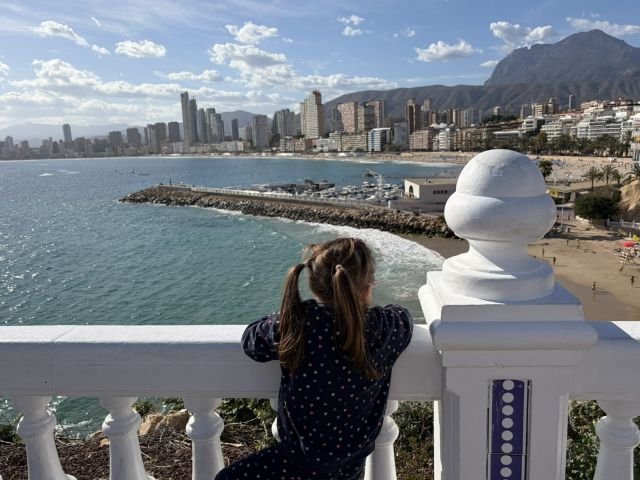
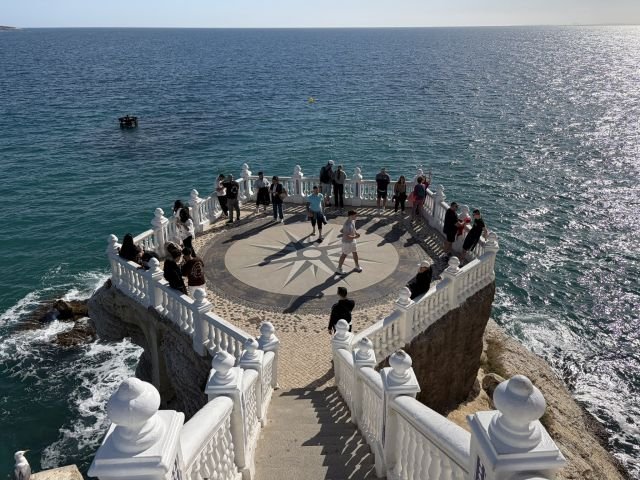
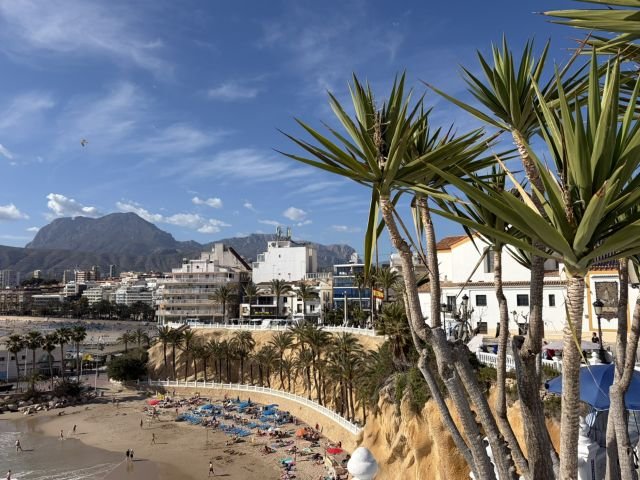
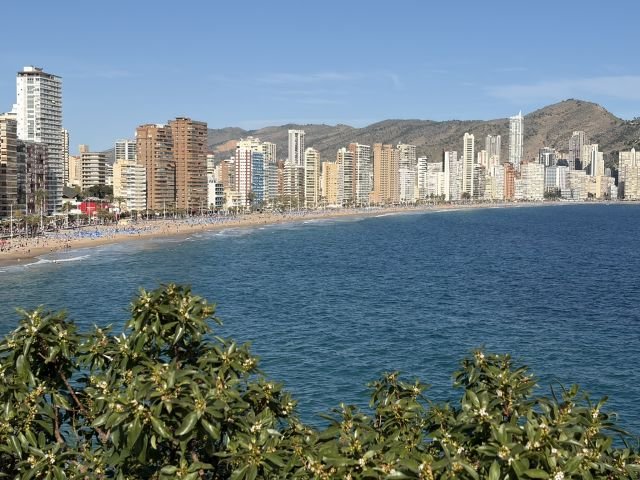
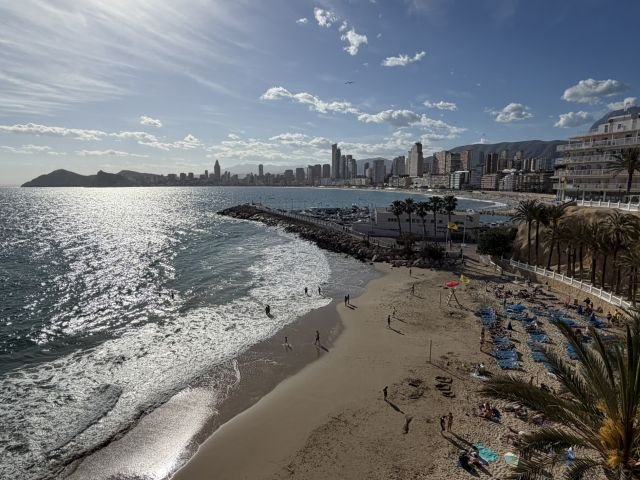
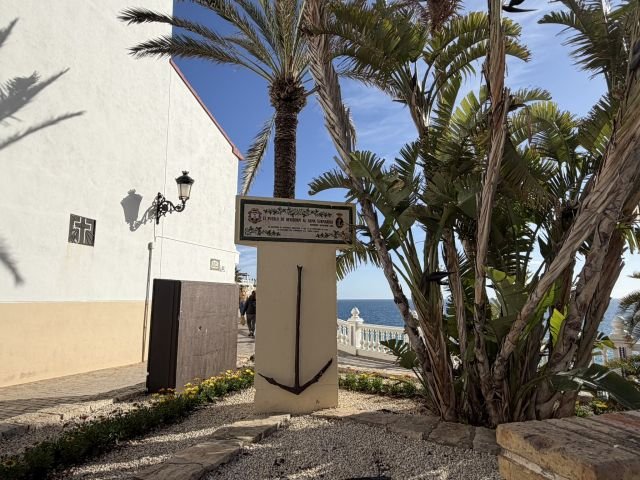
This beautiful white viewpoint is one of Benidorm’s most iconic landmarks. Standing between the blue-and-white tiled balustrades, it almost feels as if you’re floating above the sea.
The site also has an interesting history. A fortress once stood here, protecting the town from pirate attacks. Today, the viewpoint separates Benidorm’s two famous beaches—Levante Beach and Poniente Beach. The panoramic views are spectacular: endless Mediterranean waters stretch out on one side, while Benidorm’s striking skyline rises on the other.
Dinner and an Evening Walk
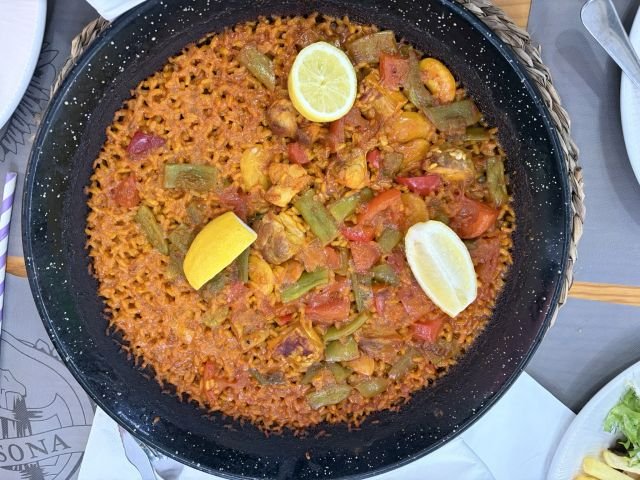
We enjoyed dinner at La Casona, where some of us chose authentic Spanish paella while the rest went for delicious chicken dishes.
To round off the day, we took one last leisurely stroll through Benidorm’s lively streets before setting off for our accommodation in Valencia at around 7 p.m.
It had been a long, adventure-filled day, and we enjoyed every single moment of it.
Some of the links in this post are affiliate links. This means we may earn a small commission at no extra cost to you. This helps support WanderingKite and allows us to continue sharing family travel tips and experiences.
@ Copyright - WanderingKite | All rights reserved! | Privacy Policy