Valencia with Kids: The Best Things to Do, Family Tips & Our 5-Day Itinerary

This post contains affiliate links. Full disclosure at the bottom of the page.
In this post:
Mercat de Colón & Valencia Bullring
Estación del Norte & Plaza del Ayuntamiento
National Museum of Ceramics & Plaza Redonda
La Lonja de la Seda (The Silk Exchange)
Mercado Central (Central Market)
Horchata Break at Plaza de la Reina
Valencia Cathedral & Miguelete Tower
Plaza de la Virgen & El Carmen District
Serranos Towers & Paella Dinner
After a relaxing first night in our apartment, we had breakfast and set off for the airport, as the other half of our family was due to land at 9:30 am. Their flight arrived slightly ahead of schedule, so by the time we reached the airport, they were already waiting for us in the car park. We found each other in no time and were soon on our way.
We booked our rental through QEEQ.com, which worked out great for us, but it’s also worth checking Discovercars and Booking.com’s car rental platform to compare the best rates for Valencia.
Once everyone and the luggage were settled in the car, we headed straight for Valencia’s Old Town, as we had planned to spend the entire day exploring the city’s historic centre.
We left the car in the Parking Valencia Centro – PAVAPARK underground car park, located right next to Mercat de Colón.
We paid €18 for the whole day, which we thought was very reasonable for such a central location. For our family, it worked out to be both cheaper and more convenient than buying individual public transport tickets for everyone from the airport and around the city.
Tip: However, if you aren’t renting a car, getting the Valencia Tourist Card is a great alternative, as it offers unlimited public transport from the airport and around the city, plus free entry to several museums.
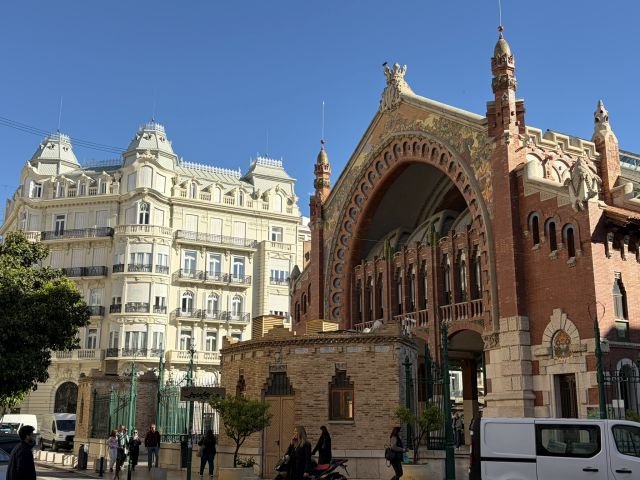
As soon as we stepped out of the car park, Mercat de Colón stood right in front of us.
This beautiful Modernist building was once a traditional market, but today it’s home to a wonderful selection of cafés, restaurants, and bars. Even if you don’t stop for a drink, it’s well worth admiring the architecture.
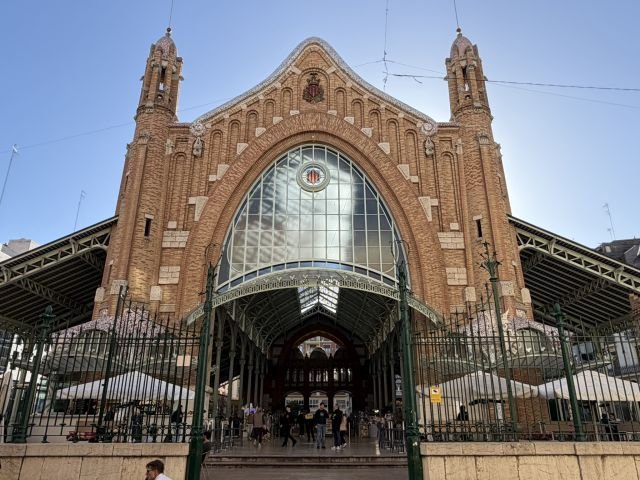
From there, we continued towards Valencia Bullring (Plaza de Toros).
Located next to the city’s main railway station, it’s one of the first landmarks many visitors see when arriving in the city centre by train or metro.
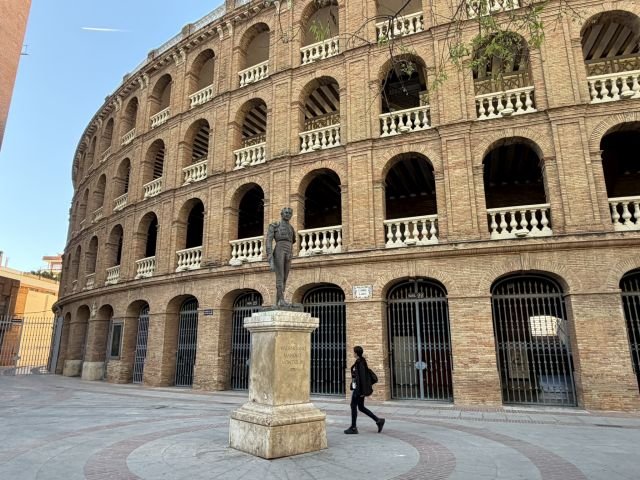
Built in the mid-19th century and inspired by Rome’s Colosseum. Although today it mainly hosts concerts and cultural events, it’s still worth stopping to admire its impressive exterior and take a few photos.
Right next to the bullring stands Estación del Norte, Valencia’s main railway station and our next stop.
Although it’s still a fully functioning station, the building itself is a work of art. The façade is decorated with colourful ceramic tiles, oranges, and other symbols of Valencia, while inside you’ll find beautiful wooden details and intricate mosaics.
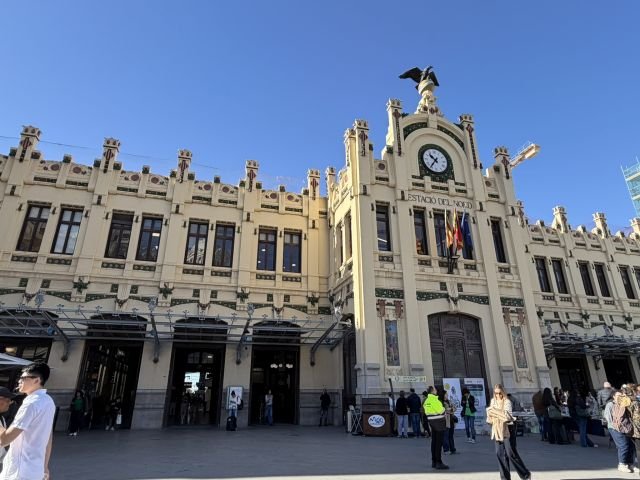
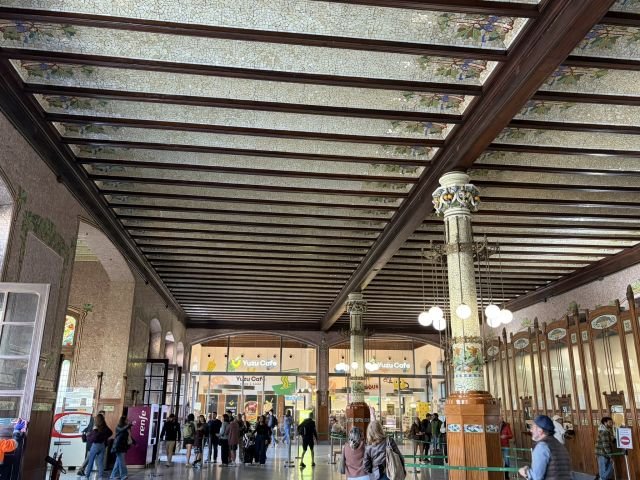
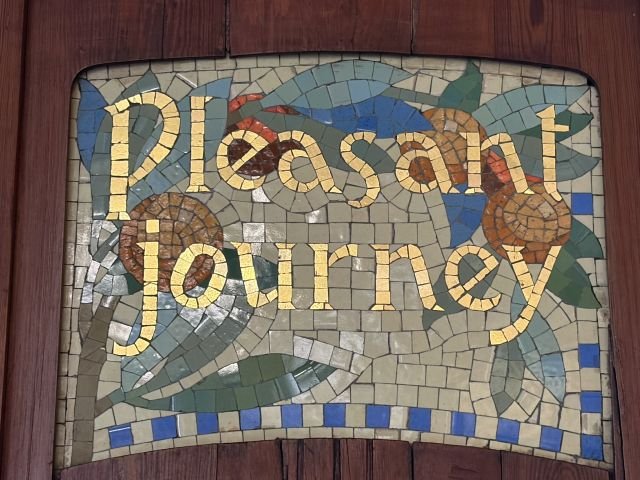
If you visit, don’t miss the former station café, which is now used as the customer service office. It’s a small detail that’s easy to overlook but well worth a quick look inside.
Just a short walk from Estación del Norte lies Plaza del Ayuntamiento, Valencia’s main square and one of the city’s busiest meeting places.
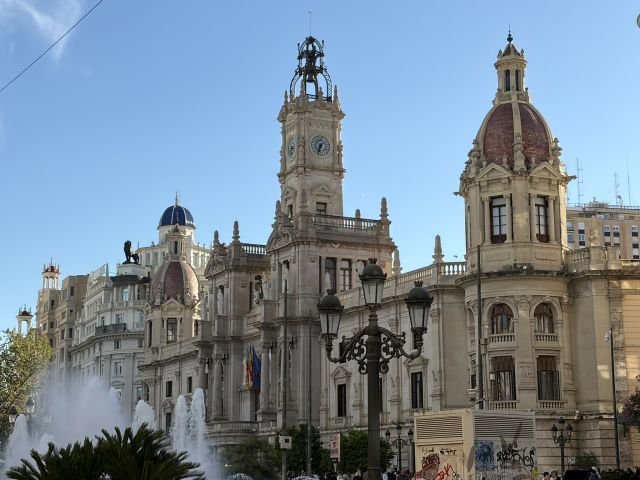
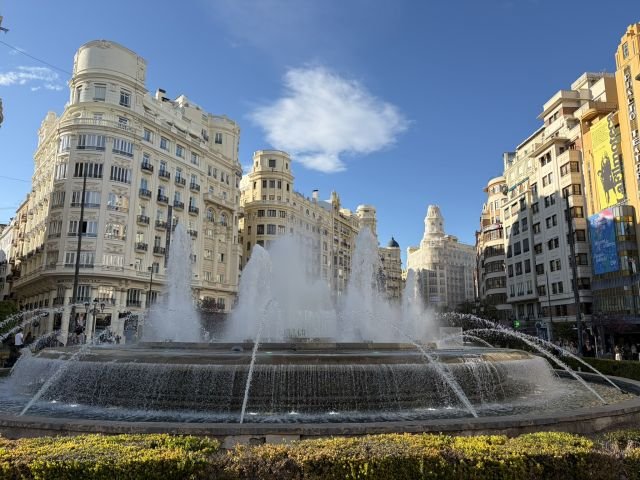
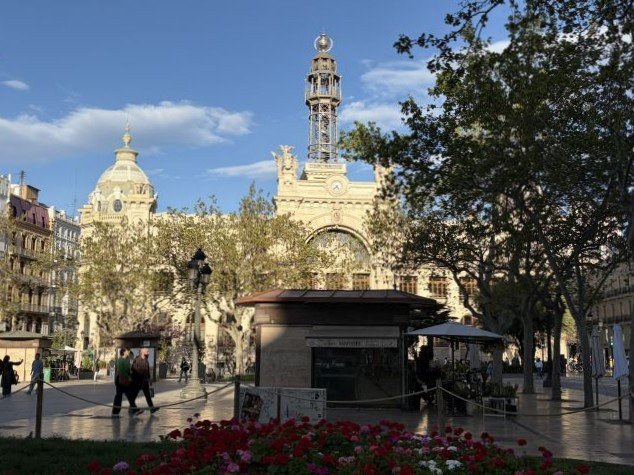
The impressive City Hall, with its grand eclectic façade, faces the elegant Post Office building, creating one of the city’s most striking architectural views.
We wandered across the square, admired the impressive buildings, and stopped for a short break by the large central fountain. Around it is a pleasant landscaped green area, making it a lovely place to sit down for a few minutes with the family.
We visited during the day, but locals say the square is especially beautiful in the evening when the fountain is illuminated with colourful lights.
Plaza del Ayuntamiento is also at the heart of Valencia’s famous Fallas Festival. If you’re here, look up at the City Hall balcony, where the mayor officially marks the beginning of the celebrations each year.
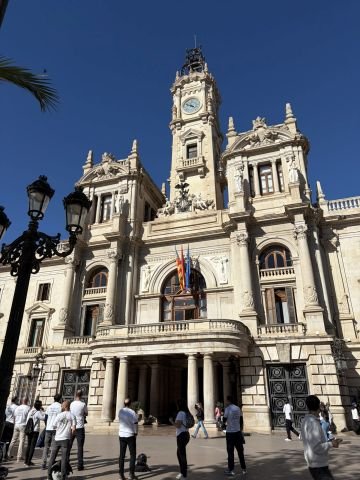
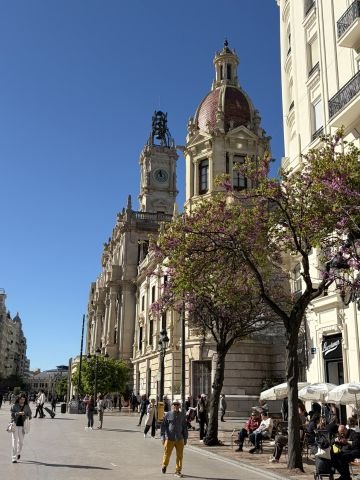
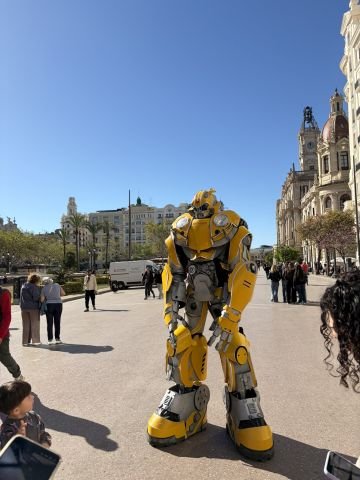
Practical tip: One of Valencia’s official tourist information offices is located inside the City Hall building. It’s well worth stopping by at the beginning of your visit, as you can pick up an excellent printed city map that’s very useful for exploring the city.
From Plaza del Ayuntamiento, we walked to the Palacio del Marqués de Dos Aguas, home to the National Museum of Ceramics (Museo Nacional de Cerámica).
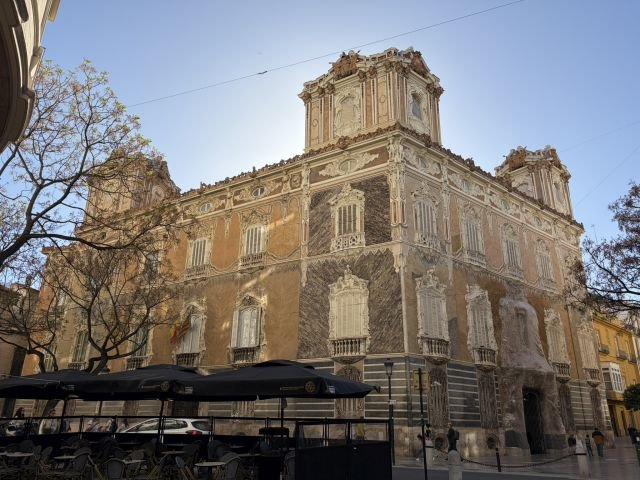
The palace’s elaborate Baroque alabaster entrance is so detailed and unusual that it almost looks as if it has stepped straight out of a fairy tale. Unfortunately, it was covered in scaffolding during our visit, so we couldn’t admire it in all its glory.
The museum itself houses Spain’s most important collection of ceramics, ranging from medieval pieces to works by Picasso. If you’re travelling with slightly older children or simply have some extra time, it’s well worth a visit.
Plaza Redonda
From the museum, we continued towards the heart of the Old Town and, after just a few minutes’ walk, found ourselves in one of Valencia’s most unusual little squares.
Plaza Redonda certainly proves that not every square has to be square. Hidden away among the surrounding streets, this perfectly circular plaza was once considered the exact geographical centre of Valencia.
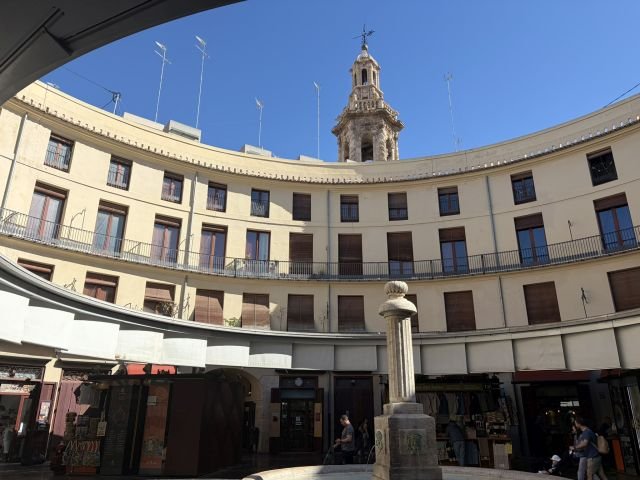
Originally established as a marketplace during the Moorish period, it has now been beautifully restored and remains a lively place to visit. Unsurprisingly, our daughter’s favourite feature was the fountain in the middle of the square.
Surrounding it are charming cafés alongside traditional shops selling lace, sewing supplies, and handcrafted ceramics. If you’re looking for an authentic Valencian souvenir, this is definitely a place worth visiting.
A Sunny Coffee Break at Blanquita Bar
Before visiting the Silk Exchange, we stopped for a short coffee break on the terrace of Blanquita Bar.
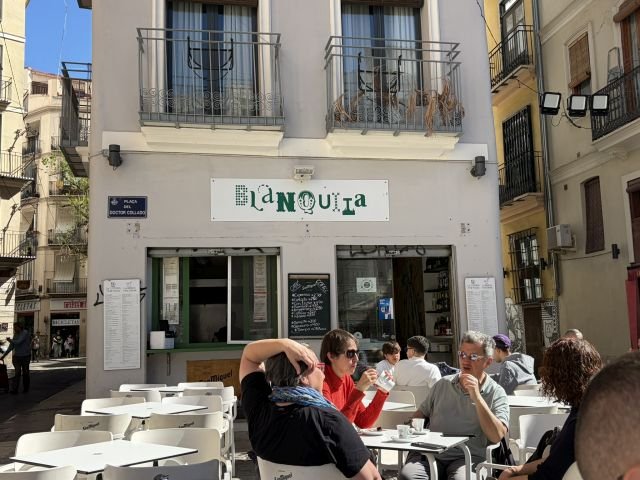
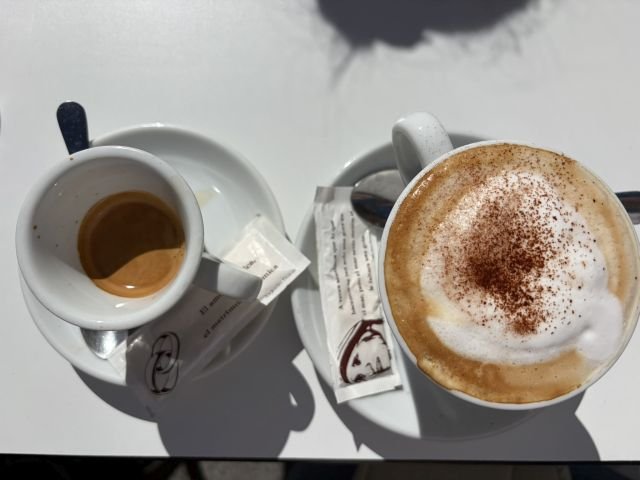
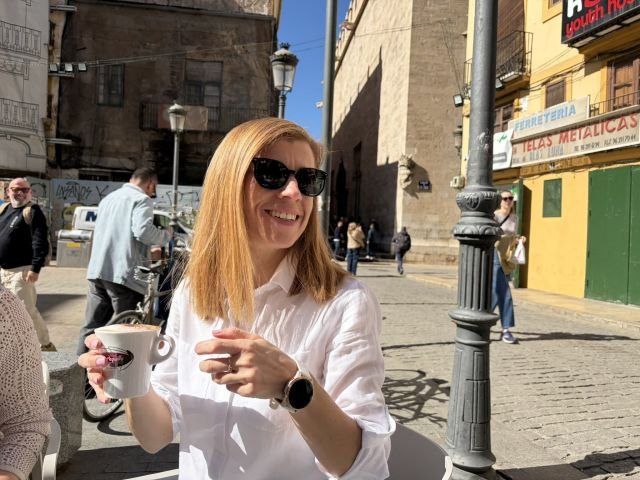
The atmosphere was relaxed, the service was friendly and efficient, and after a short rest we were ready to continue exploring the city.
After our coffee break, we headed to La Lonja de la Seda (the Silk Exchange), located just around the corner from the café and directly opposite the Mercado Central.
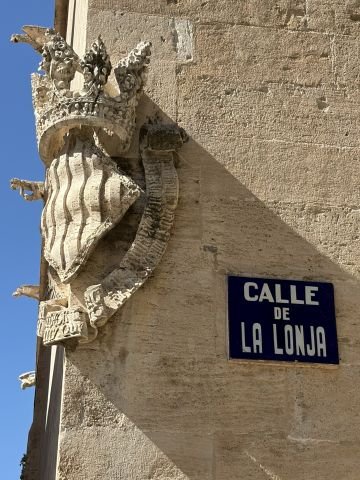
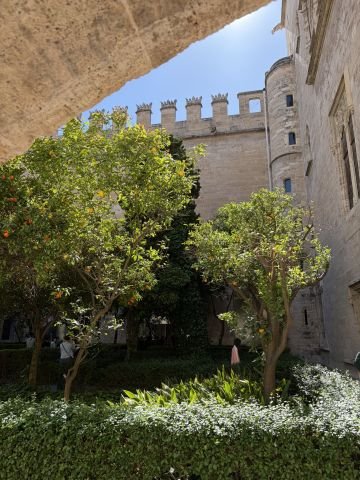
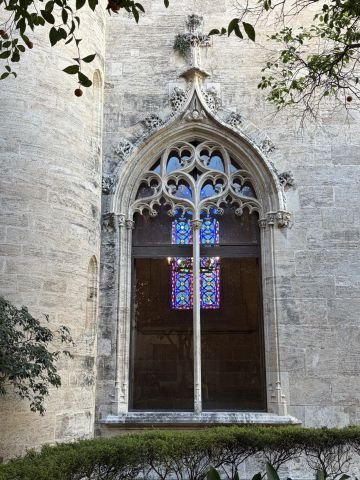
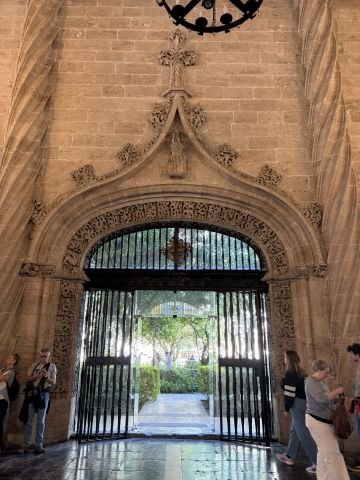
During Valencia’s Golden Age, this magnificent Gothic building was the city’s most important commercial centre, where valuable silk was traded and major business deals were made. Today, it’s recognised as a UNESCO World Heritage Site and is considered one of the finest examples of Gothic civil architecture in Europe.
We entered through the peaceful courtyard filled with orange trees before stepping into the impressive Column Hall. The vast space is supported by 24 remarkable twisted columns, each rising 17 metres high. Our daughter thoroughly enjoyed running between these enormous pillars.
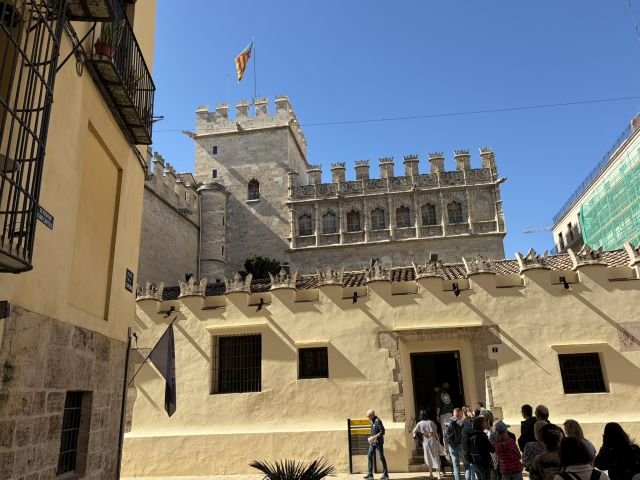
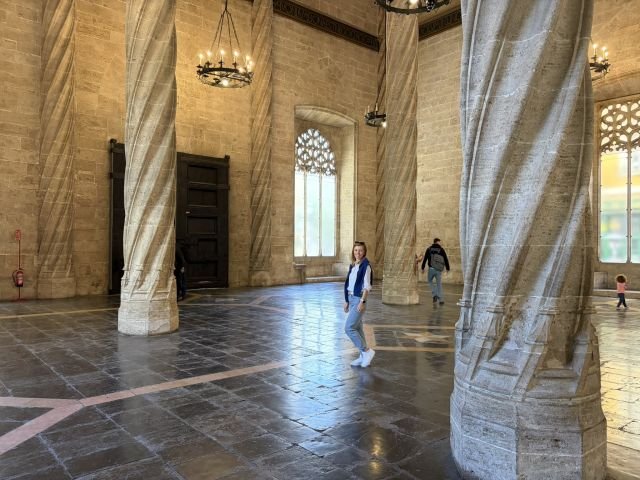
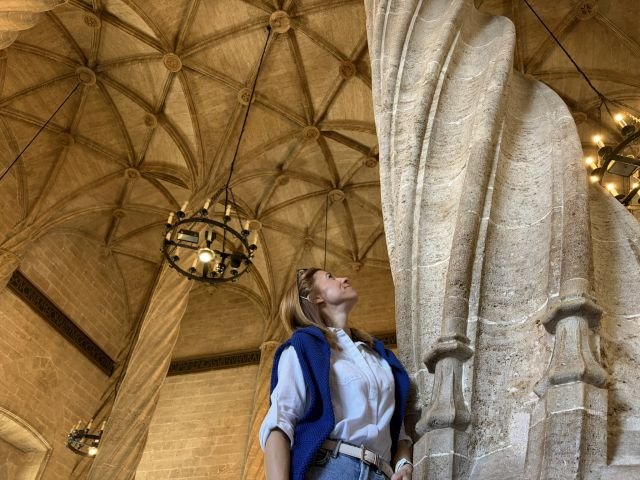
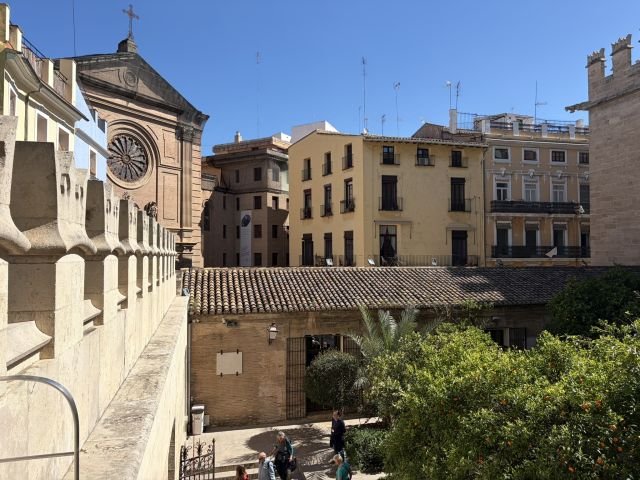
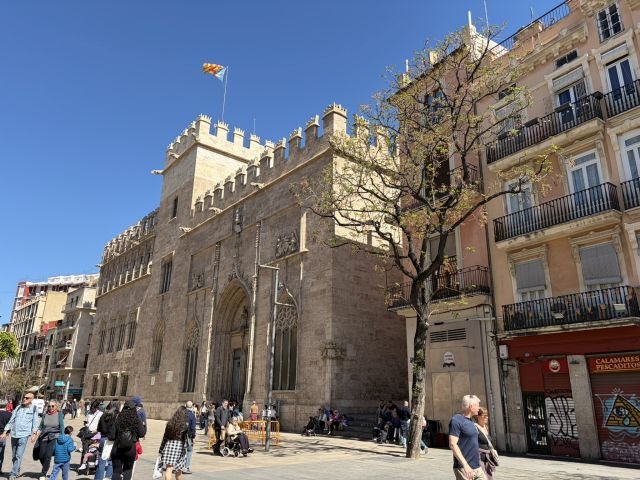
Another highlight was the Hall of the Consulate of the Sea, with its beautifully carved Gothic wooden ceiling, which is well worth taking a moment to admire.
Practical tip: There’s no need to book tickets online in advance. You can easily buy them at the ticket office by the entrance. Admission is also very affordable: adult tickets cost €2, students and seniors pay €1, and children enter free of charge.
As soon as we left the Silk Exchange, it took only a few steps to reach Mercado Central (Central Market), one of Valencia’s liveliest and most popular attractions.
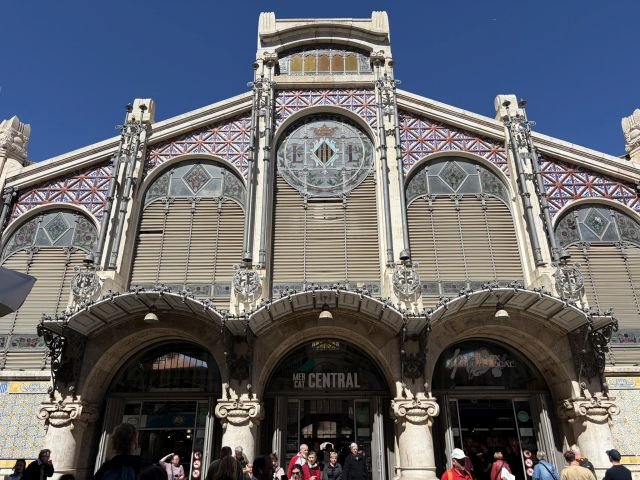
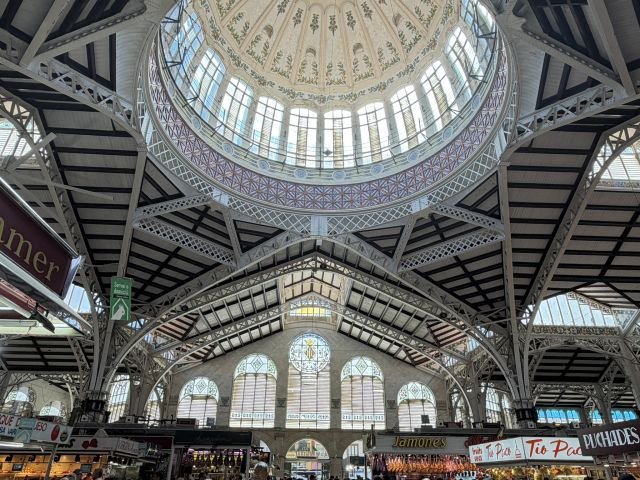
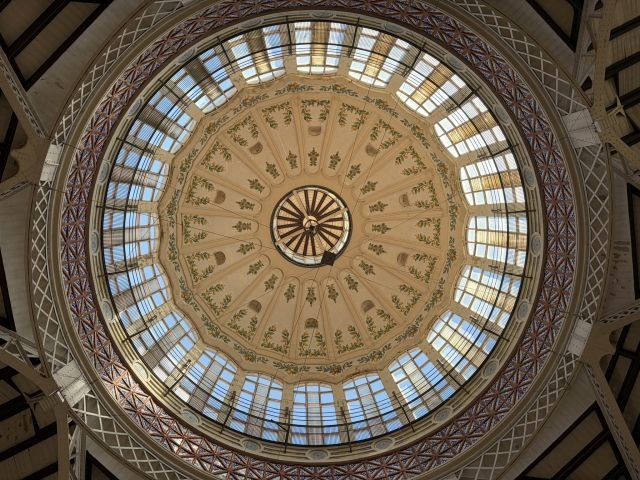
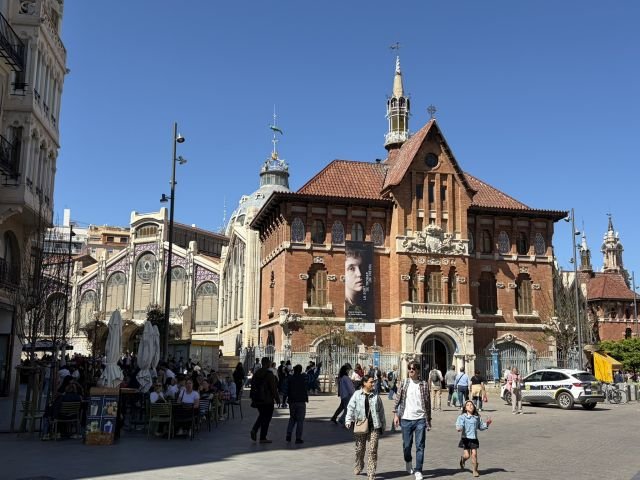
Built from iron and glass, the market hall is a beautiful example of Valencian Modernist architecture.
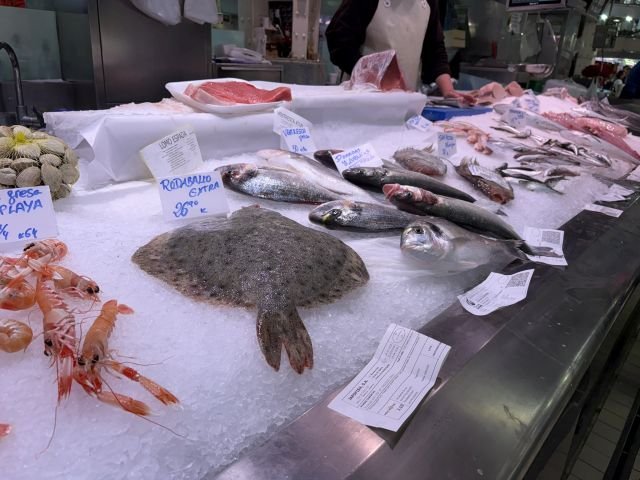
Inside, we found an incredible food market with hundreds of stalls. The atmosphere was fantastic. The aromas of fresh fruit, seafood, traditional Spanish cured ham, artisan cheeses, and freshly baked bread filled the air, creating a real feast for the senses. We absolutely loved wandering through the colourful market.
Tip: The market closes relatively early, at 3 pm, so it’s best to plan your visit for the morning or early afternoon.
Photography tip: Photography is generally allowed inside the market, making it a wonderful place to capture colourful scenes. Just keep an eye out for the occasional stall displaying a small sign asking visitors not to take photos, and be sure to respect the vendor’s wishes. Even so, you’ll still find plenty of beautiful details and vibrant displays to photograph for your family travel memories.
From the Central Market, we continued our walk through the charming streets of Valencia’s historic centre towards Plaza de la Reina. Along the way, we passed the beautiful Baroque bell tower of Santa Catalina Church, one of the city’s most recognisable landmarks.
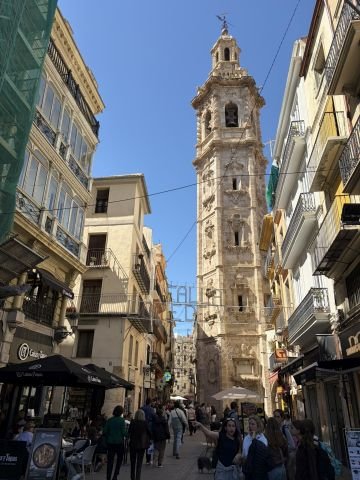
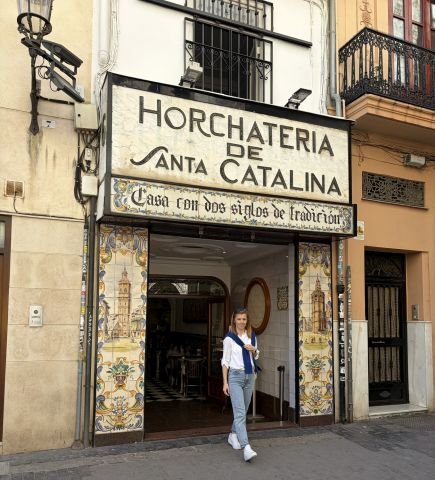
At the foot of the tower is one of Valencia’s best-known horchaterías, Horchatería Santa Catalina, where we stopped for a short break. After a busy morning of sightseeing, it was the perfect place to cool down and try Valencia’s famous local drink, horchata, traditionally served with the soft, elongated pastry called fartons.
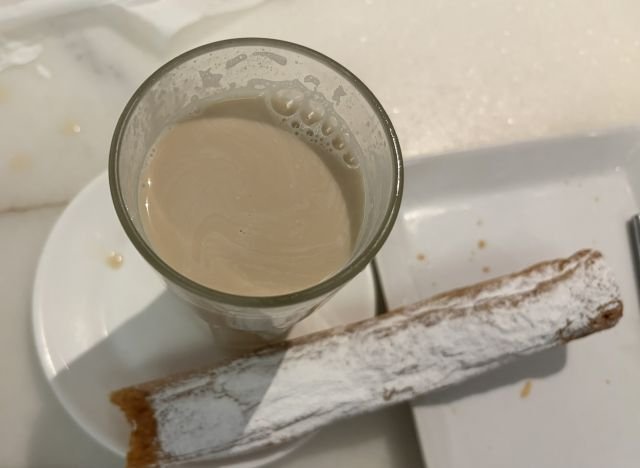
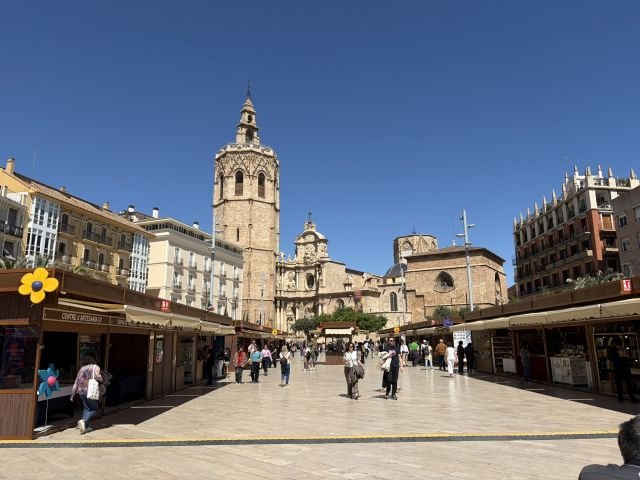
After our short break, we crossed Plaza de la Reina and continued towards Valencia Cathedral. The square is full of cafés, outdoor terraces and visitors, while also offering excellent views of both the cathedral and the famous Miguelete Bell Tower, our next stop.
From Plaza de la Reina, we walked to one of Valencia’s most important landmarks, Valencia Cathedral (Cathedral of Santa María). Built between the 13th and 15th centuries, the cathedral combines Gothic, Romanesque and Baroque architectural styles, making it one of the city’s most significant historic buildings.
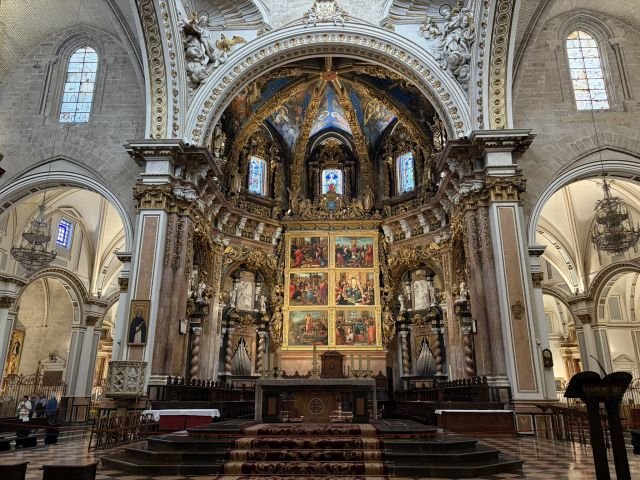
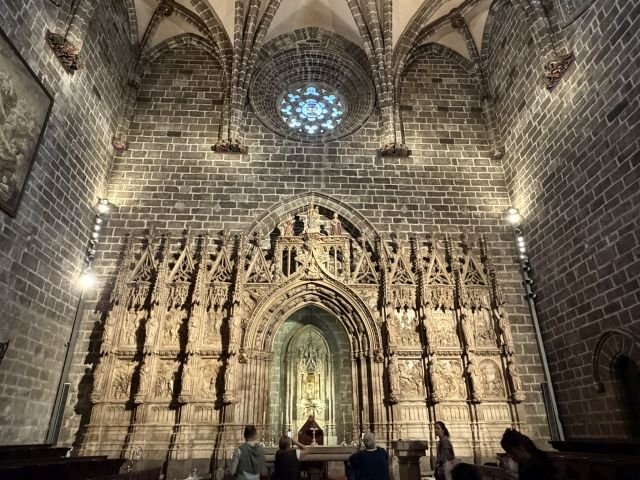
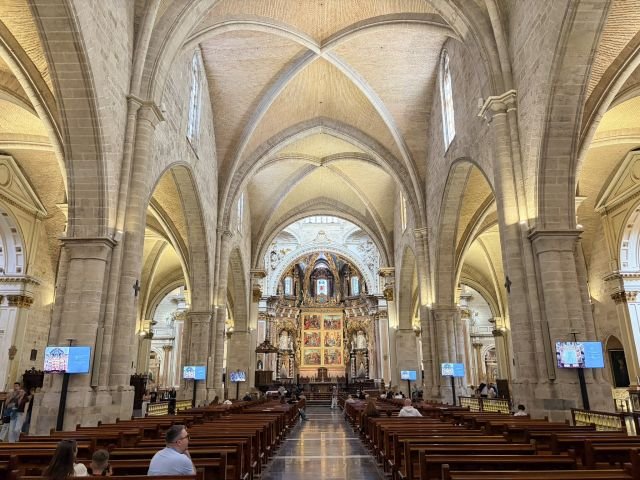
The interior is well worth exploring, but its best-known attraction is undoubtedly the Holy Chalice Chapel. According to tradition, it houses the chalice that many believe to be the legendary Holy Grail—the cup used by Jesus at the Last Supper.
Tip: If you want to skip the ticket lines when traveling with kids, you can secure your entry in advance via GetYourGuide. Check availability for your travel dates below:
We bought our tickets at the entrance. We visited on a Tuesday, during the week before the Easter bank holiday, and were pleasantly surprised that it wasn’t crowded at all. We waited only around 15 minutes to get inside.
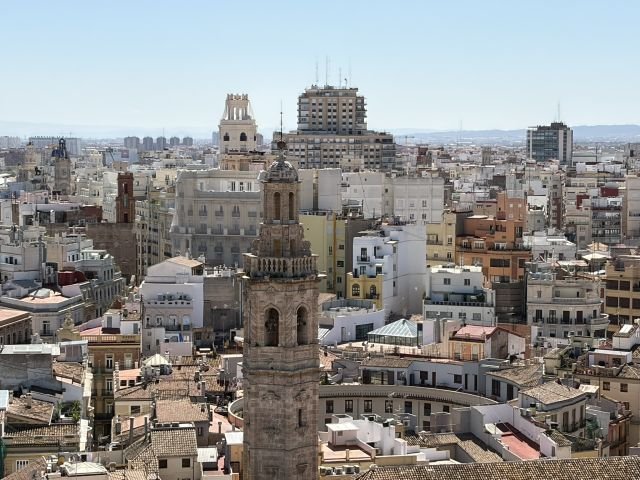
After exploring the cathedral, we couldn’t miss climbing the Miguelete Bell Tower. The 207 steps may sound like a challenge at first, but the panoramic views from the top made every step worthwhile. Climbing the tower with a four-year-old certainly required a bit of teamwork—we took turns carrying her—but for us, it was absolutely worth it.
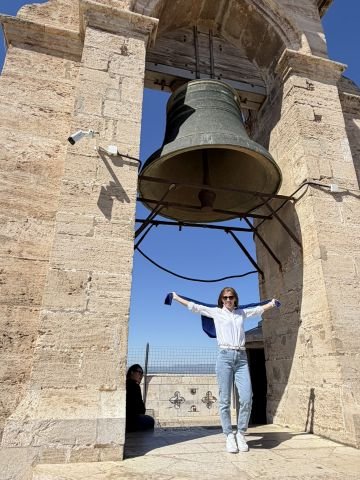
From the 58-metre-high tower, you can enjoy beautiful views across Valencia’s Old Town, its church towers, and, on a clear day, even the Mediterranean Sea in the distance.
Please note that the tower requires a separate ticket. These can only be purchased on-site at the entrance to the tower (€3), independently from the cathedral ticket.
As the narrow spiral staircase only allows one-way traffic at a time, visitors are admitted in groups. Here we waited slightly longer than at the cathedral itself—around 20 minutes before it was our turn.
Practical Information
Cathedral entrance: Through the Puerta de los Hierros (Iron Gate) on Plaza de la Reina.
Valencia Cathedral admission (2026):
Miguelete Bell Tower:
While we were still at the top of the Miguelete Tower, my father-in-law pointed towards a nearby square.
„That looks beautiful… aren’t we going there?” he asked.
„Of course—we’re heading there next!” 😊
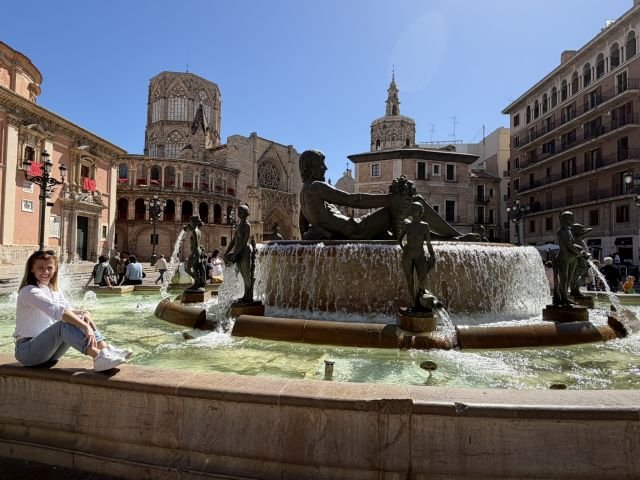
Just a few minutes’ walk behind the cathedral lies Plaza de la Virgen, which became our favourite square in Valencia. As soon as we stepped out from the narrow streets, we were struck by its relaxed Mediterranean atmosphere. People were strolling around, locals and visitors were chatting on the café terraces, and the gentle sound of the fountain created the perfect backdrop for the afternoon.
The square dates back to Roman times, when it was home to Valencia’s Roman Forum. Today, it is surrounded by three important landmarks: Valencia Cathedral, the Palau de la Generalitat, and the Basílica de la Virgen de los Desamparados.
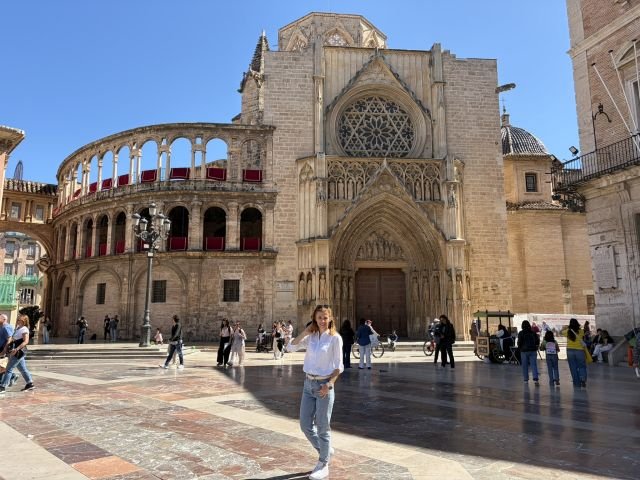
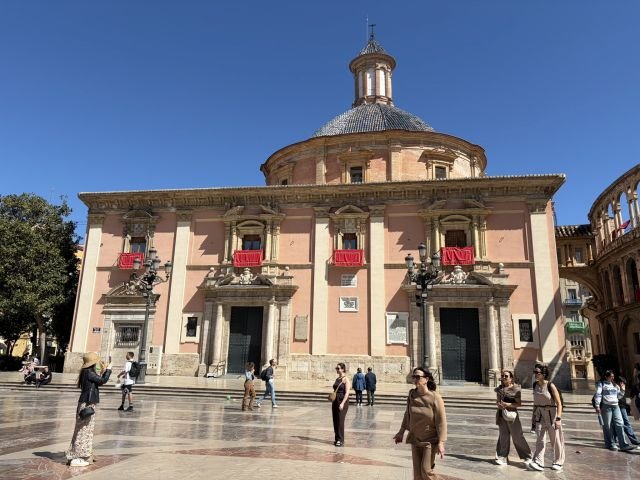
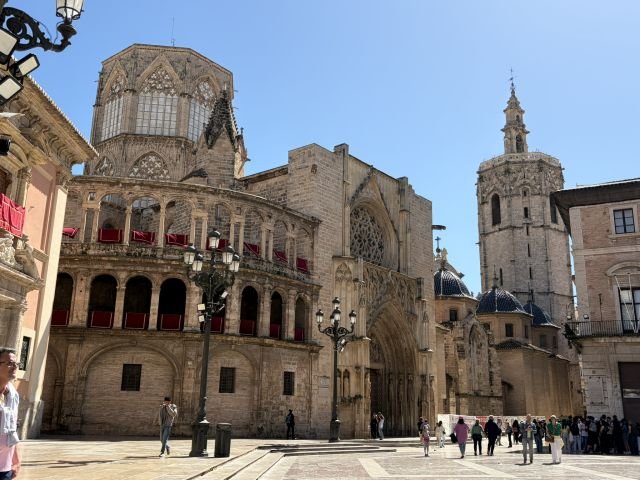
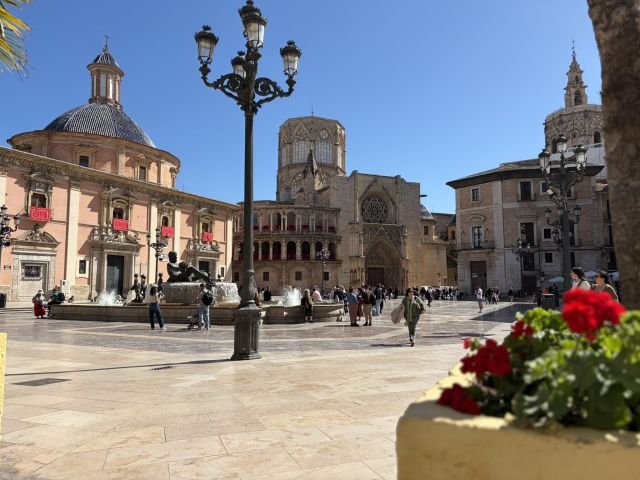
The impressive Turia Fountain immediately catches your eye. It represents the River Turia, which once flowed through the city before its course was diverted.
What we loved most about this square was simply spending a little time there—sitting by the fountain, slowing down and enjoying the atmosphere.
If we had to recommend just one square in Valencia’s historic centre where you should pause for a while during your sightseeing, it would definitely be Plaza de la Virgen.
El Carmen District
From Plaza de la Virgen, we continued into El Carmen, one of Valencia’s oldest neighbourhoods. Before our trip, we had read in several places that this was one of the city’s most atmospheric districts, known for its narrow medieval streets and colourful street art.
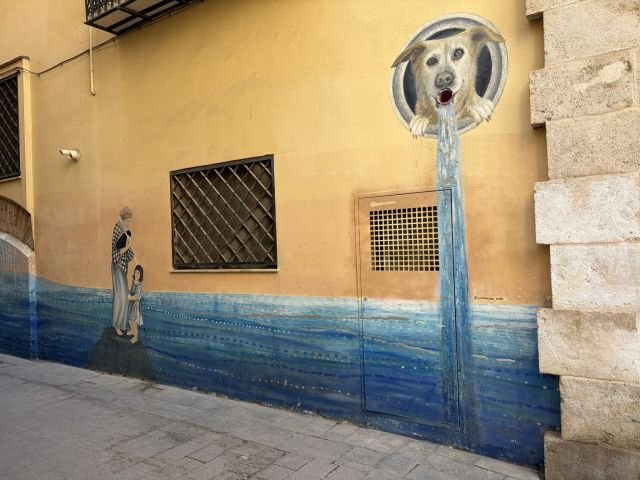
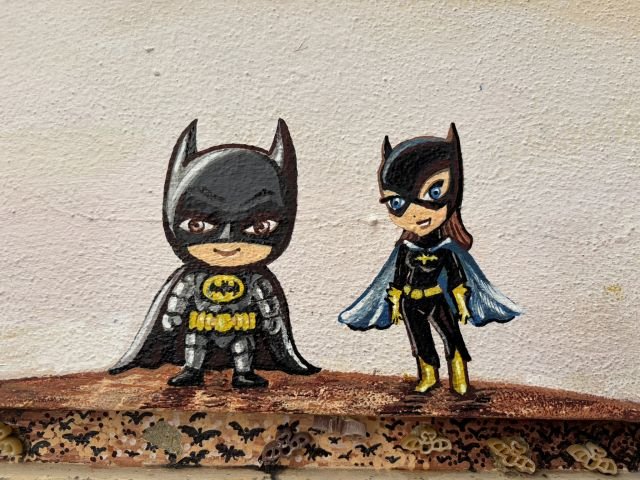
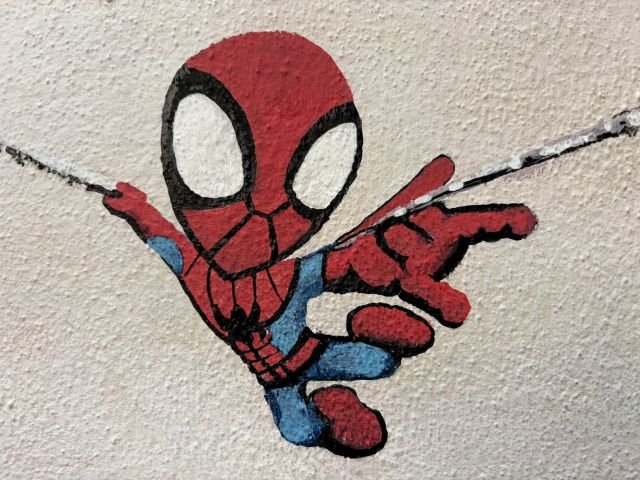
Perhaps that’s why we were a little surprised. Somehow, we didn’t quite experience the lively atmosphere that so many people describe. Maybe we visited at the wrong time of day, but many of the streets felt rather quiet and, in places, even a little empty. Compared to the bustling squares of the historic centre, the contrast was noticeable.
That said, there were still plenty of interesting details to discover. The medieval street layout, colourful murals and urban artwork appeared around almost every corner. El Carmen is particularly well known for its street art, so if you enjoy graffiti and creative urban murals, you’ll probably appreciate this neighbourhood even more than we did.
Tip: If you want to dive deeper into the history and street art of the area, booking a family-friendly walking tour on Freetour.com is a great option.
From El Carmen, we walked towards the Serranos Towers. This impressive medieval gateway is one of the best-preserved sections of Valencia’s old city walls and remains one of the city’s most recognisable landmarks.
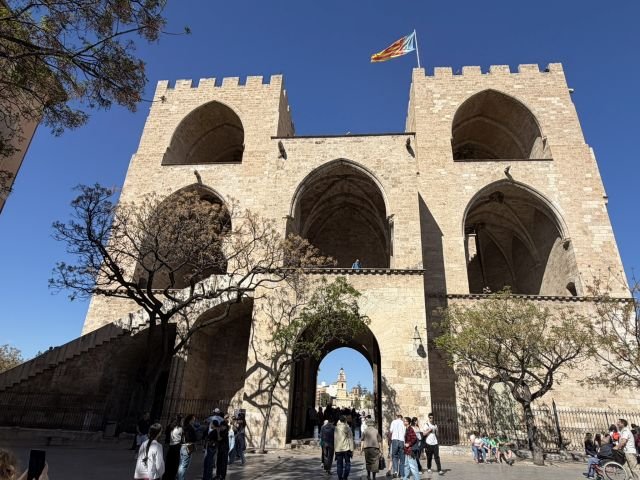
Although we didn’t climb the towers this time, we stopped for a few minutes to admire them from the outside and take some photos. They are undoubtedly one of the finest surviving monuments of medieval Valencia.
From here, we slowly made our way back towards the city centre. By then, it was already around 5 pm, and after a full day of sightseeing, it was definitely time for dinner. Since we were in Valencia, there was only one obvious choice—paella. 😊
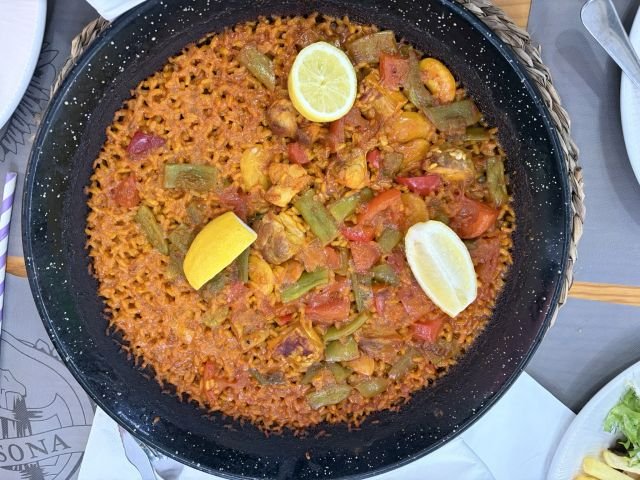
It was the perfect meal after a long day of walking. By the time we finished, my husband’s parents were understandably feeling tired after their early flight and all the sightseeing, so we headed back to the car park and then returned to our apartment.
This was about as much as we wanted to fit into one day with a four-year-old. We didn’t rush or try to tick off every attraction. Instead, we took our time, paused in the squares, sat by the fountains, and simply enjoyed the atmosphere of Valencia at our own pace.
Some of the links in this post are affiliate links. This means we may earn a small commission at no extra cost to you. This helps support WanderingKite and allows us to continue sharing family travel tips and experiences.
@ Copyright - WanderingKite | All rights reserved! | Privacy Policy